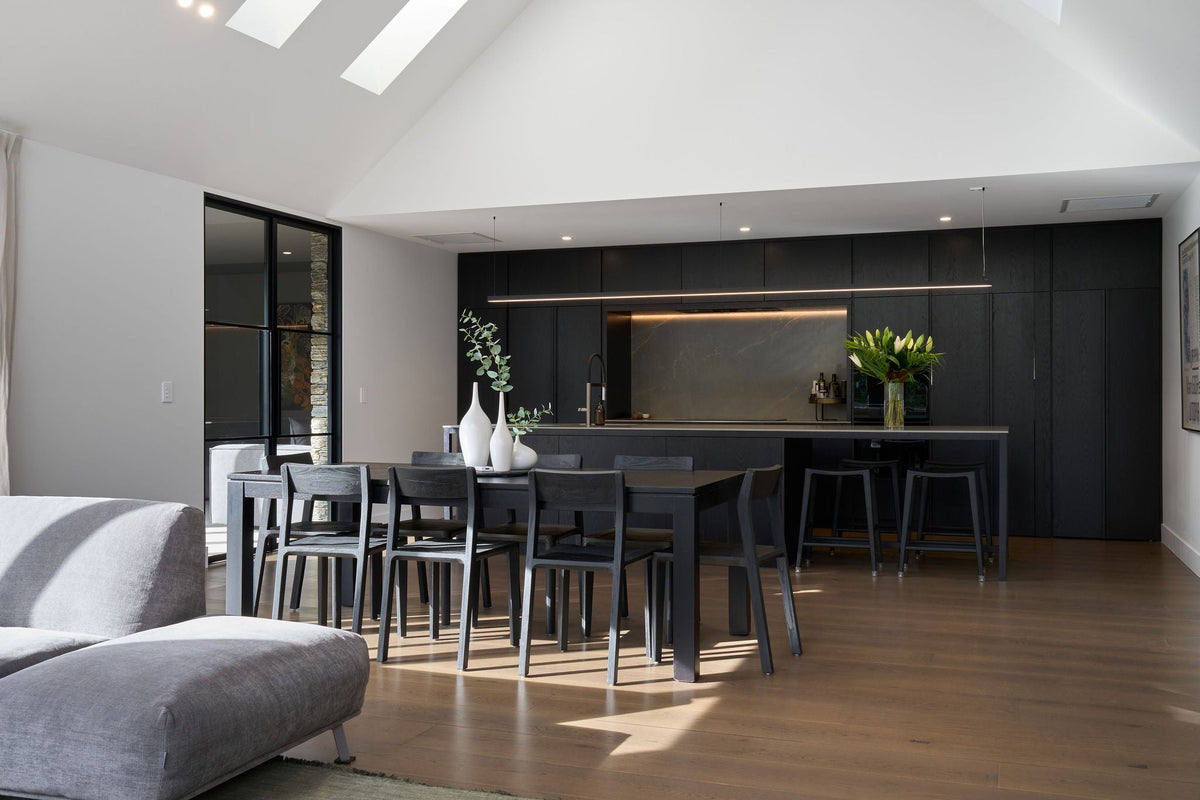
Article: Oak Flooring in New Zealand: What You Are Actually Buying
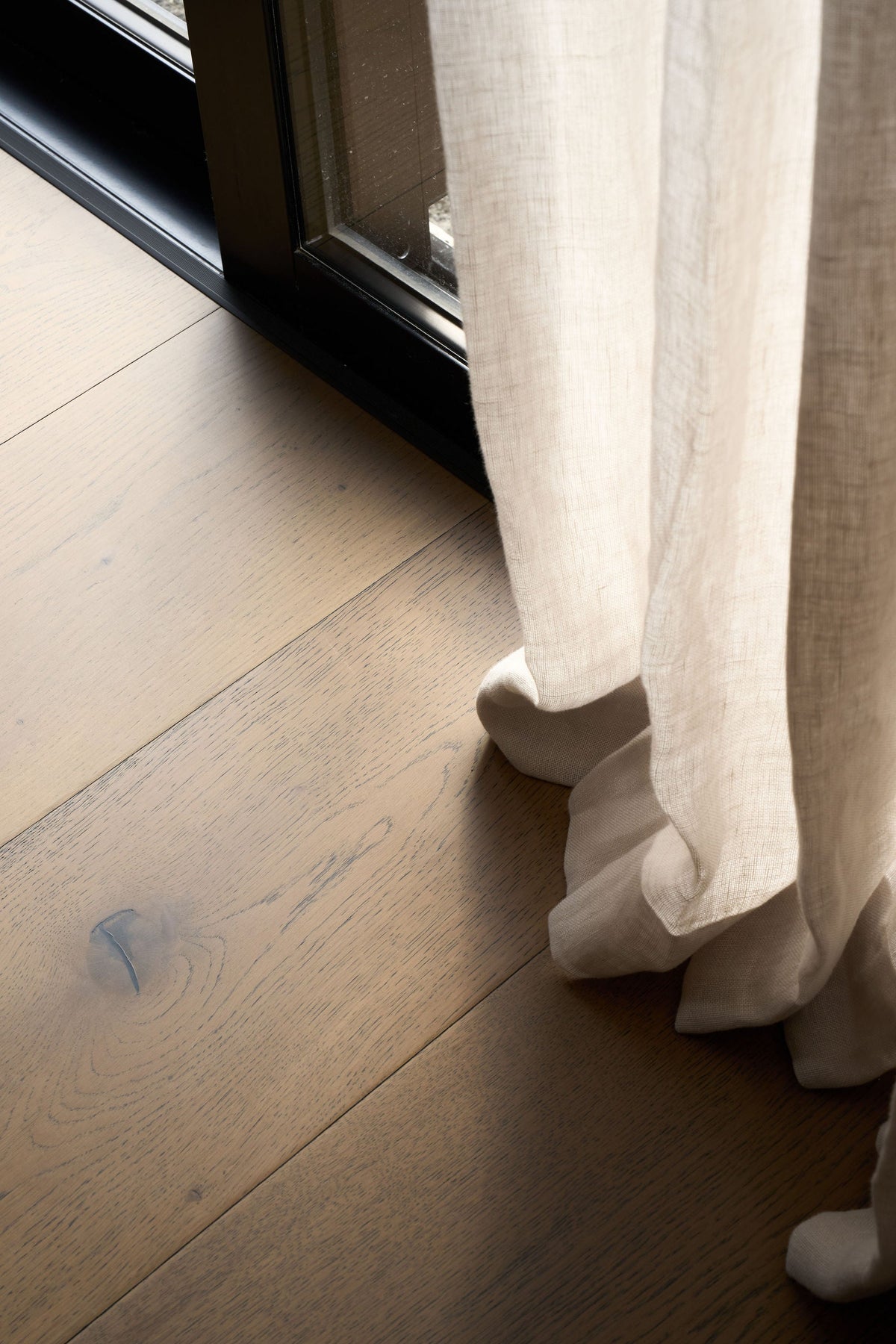
Oak Flooring in New Zealand: What You Are Actually Buying
Almost every oak floor laid in New Zealand now is engineered oak. That word makes some people uneasy, as though the real thing has been substituted for something lesser. It has not. What you walk on is solid European oak either way. The difference is what sits underneath it, and that is the part worth understanding before you spend.
This is an overview of what an oak floor actually is, how it behaves in this climate, and the handful of numbers that separate a floor you will keep from one you will replace.
Hardwood and engineered are not opposites
Hardwood describes the species. Oak is a hardwood, and Quercus robur, European oak, is the one most New Zealand architects specify. Engineered describes the construction, not the material.
A solid board is oak all the way through. An engineered board is a solid oak wear layer bonded over a cross-laminated core. The surface is the same timber, cut from the same log. What changes is how the board behaves when the air around it changes, and in New Zealand that is not a small matter.
The full comparison is in engineered or solid oak flooring.
The four numbers that decide everything
Colour and grain are what people choose on. These four are what they live with.
Wear layer. The thickness of the solid oak on top, which determines how many times the floor can be sanded and recoated rather than replaced. Across the New Zealand market this ranges from about 2mm at entry level to 6mm at the premium end. A 2mm layer will not survive a full sand. A Marchand board carries 6mm, which takes four or five re-sands at roughly 1mm each.
Overall thickness. Most engineered boards sold here are 14mm or 15mm. Ours are 20mm, which is closer to a solid floor underfoot and sits at the height most New Zealand aluminium joinery is designed around. That is covered in why 20mm is the New Zealand standard.
The core. Cores range from single-layer to fully cross-laminated. Ours is cross-bonded eucalyptus with a birch backing, where each layer runs against the one beneath it so the plies restrain each other. This is the part nobody sees and the part that decides whether the floor is still flat in twenty years. What is inside an engineered oak board sets it out properly.
Grade. Grade governs how much knot, sapwood and colour movement the boards carry. Ours is Prime: slight natural colour variation, fewer and smaller knots, dark filler. Grade is not a quality ranking so much as a decision about how much character you want, and it is explained in oak flooring grades.
Every figure is published on the technical specifications page rather than held in a brochure.
How oak behaves in a New Zealand house
Timber takes up moisture and gives it off. That is not a defect, it is what timber does, and it is why a floor that is right for a European apartment is not automatically right for a house in Canterbury or Central Otago.
Three things manage it. The cross-laminated core holds the board dimensionally stable through seasonal swings. The boards leave the warehouse at 6 to 9 per cent moisture content, so they arrive close to where they need to settle. And they are glued down over their whole length rather than floated, so each board is held to the substrate instead of moving above it.
The practical consequence is that a Marchand floor needs no expansion gaps within a room. A twelve metre run has no cover strips and no breaks in it.
Underfloor heating is a common question and the answer is yes, with engineered construction and a surface temperature held at or below 27 degrees. The commissioning sequence is on the underfloor heating page.
Choosing a format
Width gets the attention. Length does more of the work, because a wide board that is short still breaks a room into a grid of end joints.
Marchand floor boards are 240mm wide and 2200mm long, in a 20mm profile. One plank in each pack is split at random so the end joints stagger naturally rather than falling into a repeating pattern. What goes wrong when format is chosen badly is set out in wide plank oak flooring.
Herringbone and parquet are a separate decision from the plank, and the patterns, set-out and wastage are covered on the parquet flooring page.
Choosing a colour
Twelve flooring colours, from Blanc at the palest through to Bordeaux and Chocolat at the dark end, and every one is the same board at the same rate. There is no loading for a darker or more complex finish.
The finish is a factory-applied UV matt lacquer at a gloss level of 8 to 12 per cent, nine coats, with nothing applied on site. That gives a consistent surface across the whole floor and removes site finishing from the programme entirely.
Oak moves considerably with the light in a room, so a colour chosen from a screen rarely survives contact with the floor it ends up on. The colour guide is the place to start, and samples are free anywhere in New Zealand.
What decides the price
Two oak floors can look identical in a showroom and differ by half in price. The gap is almost always in the four numbers above, and it shows up later rather than sooner.
A floor with a 2mm wear layer on a single-layer core cannot be refinished. When it wears it is lifted and replaced, and the second purchase lands inside fifteen years. A floor with a 6mm layer on a cross-laminated core is sanded and recoated instead, which is a fraction of the cost and none of the disruption.
What actually drives the number on a quote is set out in engineered oak flooring cost, and if you are holding several quotes that are hard to line up, how to compare timber flooring quotes is the one to read.
Four questions worth asking any supplier
These take a minute and the answers are diagnostic.
- How thick is the oak wear layer, and how many sands does that allow?
- What is the core made from, and is it cross-laminated?
- What grade is the oak, and what does that mean for knots and colour?
- What is the warranty, and can I read it in full rather than a summary?
A supplier who answers immediately, in figures, is selling a specified product. One who cannot is selling a finish. Ours are 6mm, cross-bonded eucalyptus, Prime, and 25 years residential with 5 years commercial, published in full.
On sourcing, the flooring is supplied as an FSC 100% certified product from an FSC Chain of Custody certified producer, which means every fibre comes from certified forest rather than being blended with controlled wood. The detail, and what Marchand does and does not hold, is on the sustainability page.
Frequently asked questions
Is engineered oak real hardwood?
Yes. The surface is solid European oak, the same timber as a solid board. Engineered describes how the board is built, not what the wearing surface is made of.
How long does an oak hardwood floor last?
A board with a 6mm wear layer takes four or five full sands at about 1mm each, so it is refinished rather than replaced and can reasonably last the life of the building. A 2mm wear layer cannot be sanded and is a replacement product.
What thickness should I specify in New Zealand?
Most engineered boards sold here are 14mm or 15mm with a 3mm or 4mm face. A 20mm board with a 6mm face is closer to solid underfoot and aligns with standard New Zealand joinery heights.
Does oak flooring need expansion gaps?
Not with this construction. A cross-laminated core, glued down over a dry primed substrate, allows boards to run to the wall with no expansion gaps or cover strips within a room.
How many colours does Marchand oak flooring come in?
Twelve, all at one rate, with no loading for darker or more complex finishes. A thirteenth, Noir Bandsawn, is made as a wall and ceiling board only.
Can oak flooring go over underfloor heating?
Yes, with engineered construction, a system set in screed and a floor surface temperature held at or below 27 degrees.
See the boards in your own light. Order free samples, browse the flooring range, or visit the Christchurch, Auckland or Queenstown studio.
Last reviewed September 2026.