Wide Plank Oak Flooring NZ: What Buyers Get Wrong
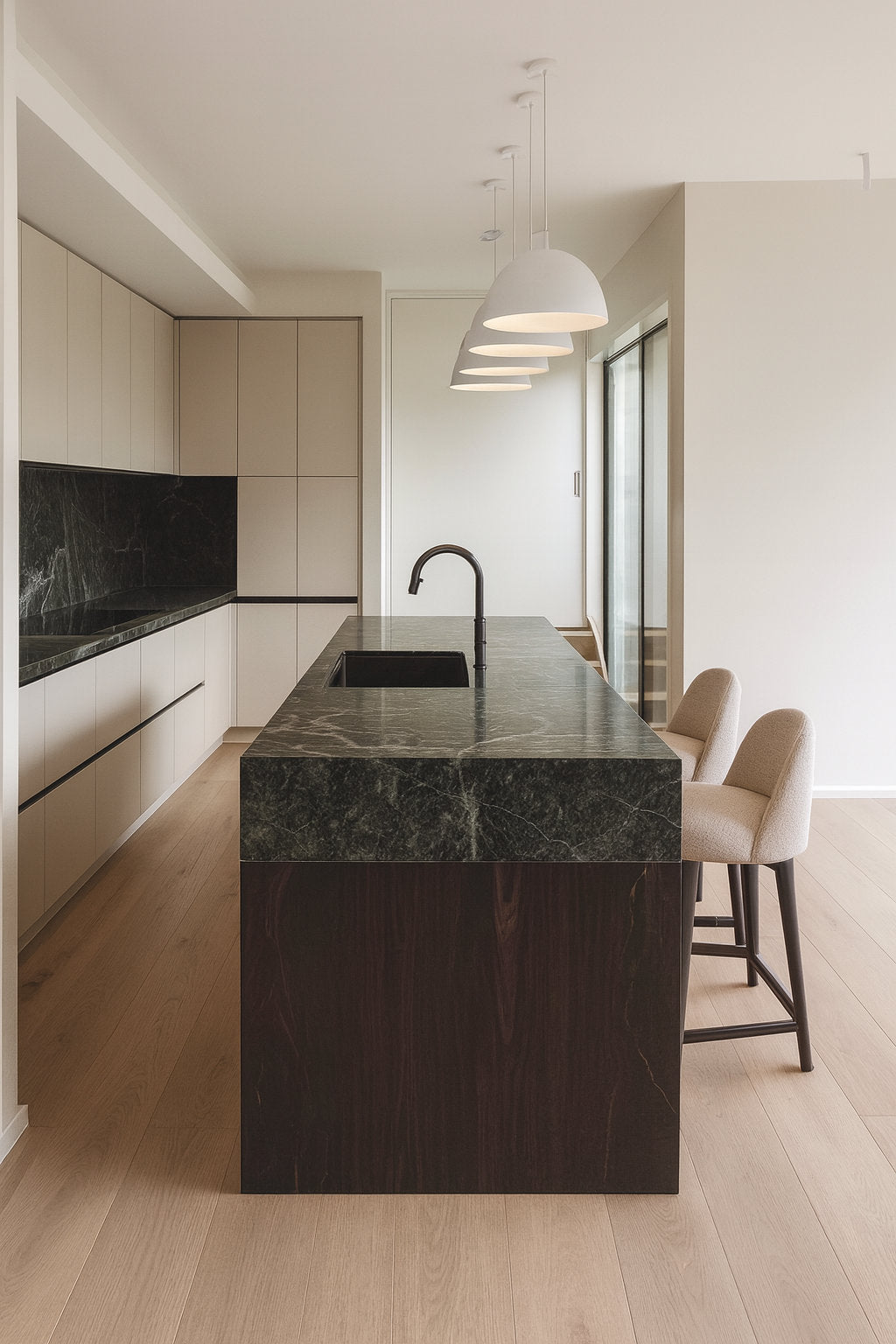
Wide plank oak is the most requested specification in New Zealand's premium residential market. Boards 200mm and wider create fewer visual breaks, amplify grain and make rooms feel more expansive.
But wider boards move more, and in a humidity-variable climate that movement becomes the biggest point of failure when the engineering is wrong. If gaps open six months after installation, the width was not the problem. The construction was.
Mistake one: solid timber in wide formats
Solid wide planks are a gamble in New Zealand conditions. Without cross-laminated stability, boards over 180mm in solid oak can cup noticeably within two winters in most North Island homes. Engineered construction is not a compromise for wide formats. It is the only responsible specification.
Mistake two: ignoring subfloor moisture
Under NZBC clause E3, flooring installations must manage moisture to prevent damage to the building structure. For wide plank this is more critical, not less. A concrete slab that is too wet will push moisture into the boards from below regardless of how well engineered they are; for a Marchand floor the slab must read at or below 65% relative humidity, or 5% by weight, before it is primed.
Moisture testing before installation is not optional. Our installation guide sets out the requirements, and our Alternative Solution for NZBC E3 is published alongside it.
Mistake three: buying on price per square metre
A common scenario. A homeowner finds wide plank at around $95 per square metre, roughly half the price of a properly engineered product. The boards look identical in the showroom and install beautifully on day one.
But across the New Zealand market wear layers range from about 2mm at entry level to 6mm at the premium end, and cores range from single-layer to fully cross-laminated. A 2mm wear layer cannot be refinished more than once, if at all. Within a few years edge cupping appears, and the floor needs full replacement, at which point the total spend exceeds what a quality engineered floor would have cost upfront.
Mistake four: forgetting length
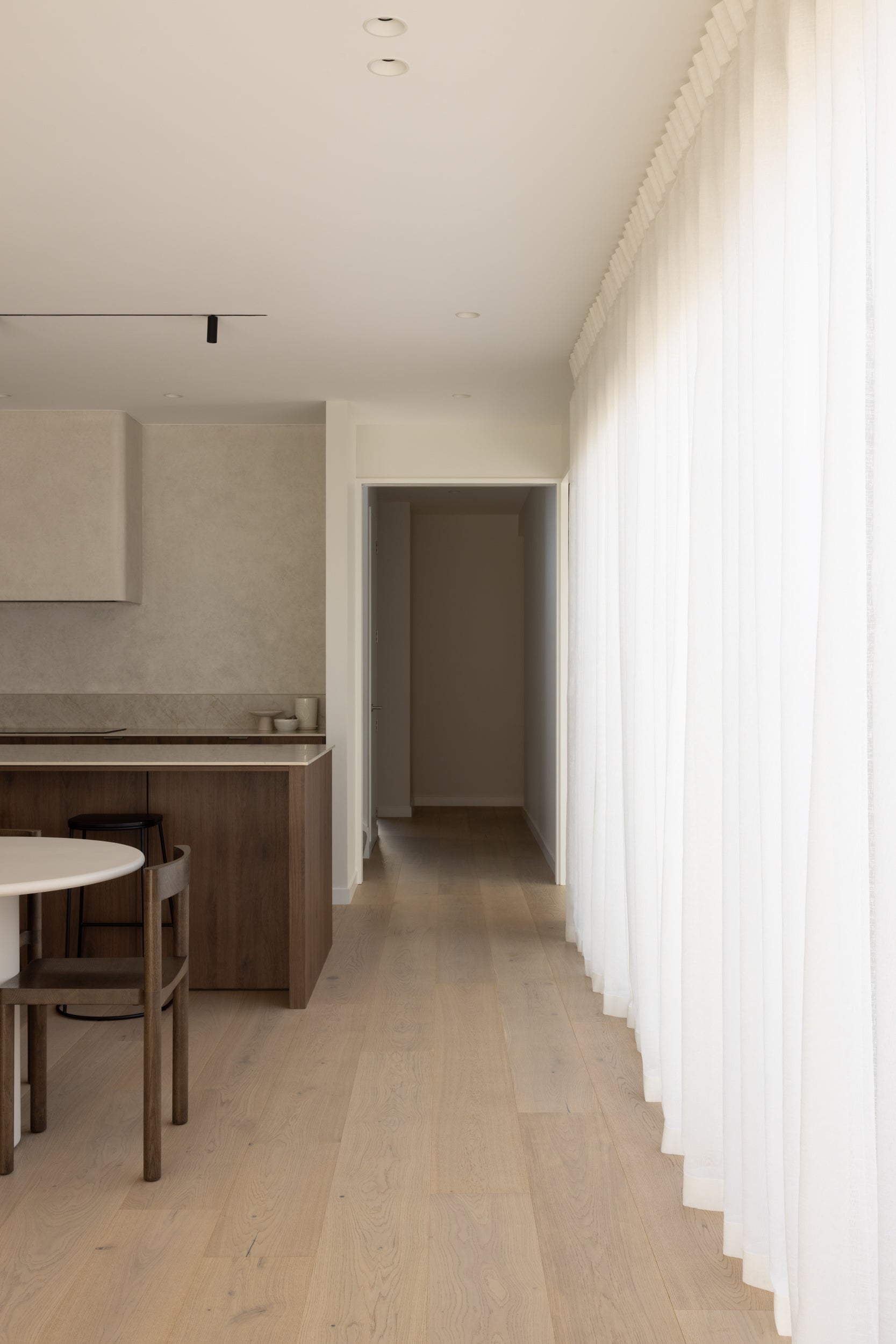
Width gets the attention; length does the work. A 240mm board that is only 1200mm long still breaks a large room into a grid of end joints. Marchand floor boards are 240mm by 2200mm, and one plank in each pack is split at random so the end joints stagger naturally across the room rather than falling into a pattern. In an open-plan space the boards run through kitchen, living and dining without a change of direction or a threshold, which is what makes the floor read as one surface.
Long boards are also what make a floating or wrapped staircase affordable: a 2200mm board wraps a tread up to 1090mm wide, with the offcut going into the next tread. Detail on our stair page.
Stability across a big room
A wide, long board over a large open-plan slab has more timber to move and nowhere to hide it. Three things keep a Marchand floor flat. The 20mm board with its cross-bonded eucalyptus core is stiffer than a 14mm board and moves less. It is glued down over its whole length, so each board is held to the slab rather than floating over it. And it needs no expansion gaps within a room, so there are no cover strips or breaks across a 12-metre run. Colour holds across the room too: we order in full-container batches of about 2000m², compare each new batch against a retained master before it is packed, and where a project's timing allows we set aside the whole quantity from one batch.
What to specify instead
- Cross-laminated engineered core, not aligned grain
- A thick oak wear layer, so the floor can be sanded and recoated rather than replaced
- Long boards, glued down, so a big room is one surface without expansion strips
- Verified moisture testing before laying
- A written warranty, backed by documentation. Ours is 25 years residential and 5 years commercial, and published in full
Wide boards in practice
Sugi House in Wānaka uses 240mm Chocolat planks in a deliberately compact home, where the generous width visually expands each room. The project won the NZIA Southern Small Project Architecture Award.
Frequently asked questions
How wide and long are Marchand boards?
Floor boards are 240mm wide by 2200mm long. Wall and ceiling boards are 120mm wide and 2400mm long, half the width of the floor board, so joints align. The Noir board is the exception, at 240mm wide by 2200mm.
Do wide boards cup in New Zealand?
Solid wide boards often do. A 20mm engineered board with a cross-bonded core, glued down over a dry, primed slab, stays flat through New Zealand's humidity swings.
Do long boards need expansion gaps in a large open-plan room?
No. Marchand boards run to the wall with no expansion gaps or cover strips within a room, because the engineered construction and glue-down installation hold them.
Will the colour match across a big floor?
Yes. Boards are ordered in full-container batches, each batch is compared against a retained master before packing, and a project's full quantity can be set aside from one batch.
Which colours come in wide plank?
All twelve flooring colours. Every Marchand floor colour is the same 240mm by 2200mm board at one price.
See the width for yourself. Order a sample board or visit a studio.
Last reviewed September 2026.