How to Compare Timber Flooring Quotes in New Zealand
Two flooring quotes arrive. One is $160 a square metre, the other is $240. It looks like a simple choice, and it almost never is, because the two numbers are rarely for the same thing. This is how to line them up so that what you compare is the floor you will live on, not the way each supplier chose to write the quote.
None of this is specific to Marchand. Ask every supplier the same questions and write the answers side by side; the floor that is better value usually becomes obvious before you get to the price.
1. What is the board, exactly?
Ask for the total thickness, the wear layer thickness, and what the core is made of. A quote that says "engineered oak" covers everything from a 2mm veneer on a 12mm softwood core to a 6mm oak face on a 20mm cross-bonded core. The first cannot be sanded; the second can be refinished four or five times. If a quote does not state the wear layer in millimetres, ask, and treat a vague answer as 2mm.
2. How is it finished, and where?
Factory-finished boards arrive lacquered and are walked on the day the weights come off. Unfinished or lightly sealed boards need sanding and coating on site: extra days, dust, fumes and a labour line that may or may not be in the installation quote. Ask which it is, how many coats, and whether any site coating is included.
3. Is the area the plan area, or the plan area plus waste?
Straight-lay plank needs roughly 7 to 10 per cent waste; herringbone needs 15%. A quote on the bare plan area looks cheaper and comes up a pack or two short, at which point the top-up may be a different batch. Ask what waste allowance is built in, and whether the pack count is stated.
4. What is in the per-metre rate, and what is not?
Line up the extras: freight to site, stair treads and nosings, transition bars and trims, primer and adhesive, samples, delivery to a difficult address. On a house with a staircase and three thresholds these can add meaningfully to the total, and they are the usual reason a low per-metre quote ends up higher than a fuller one.
5. Who is doing the subfloor?
Levelling, moisture testing, primer and, on a slab, a moisture reading before laying: usually the installer's line, sometimes nobody's. Ask who is responsible for testing the slab and to what limit, who levels it, and what happens to the price if the slab fails the test. A floor is only as good as what is under it.
6. Glued down or floated?
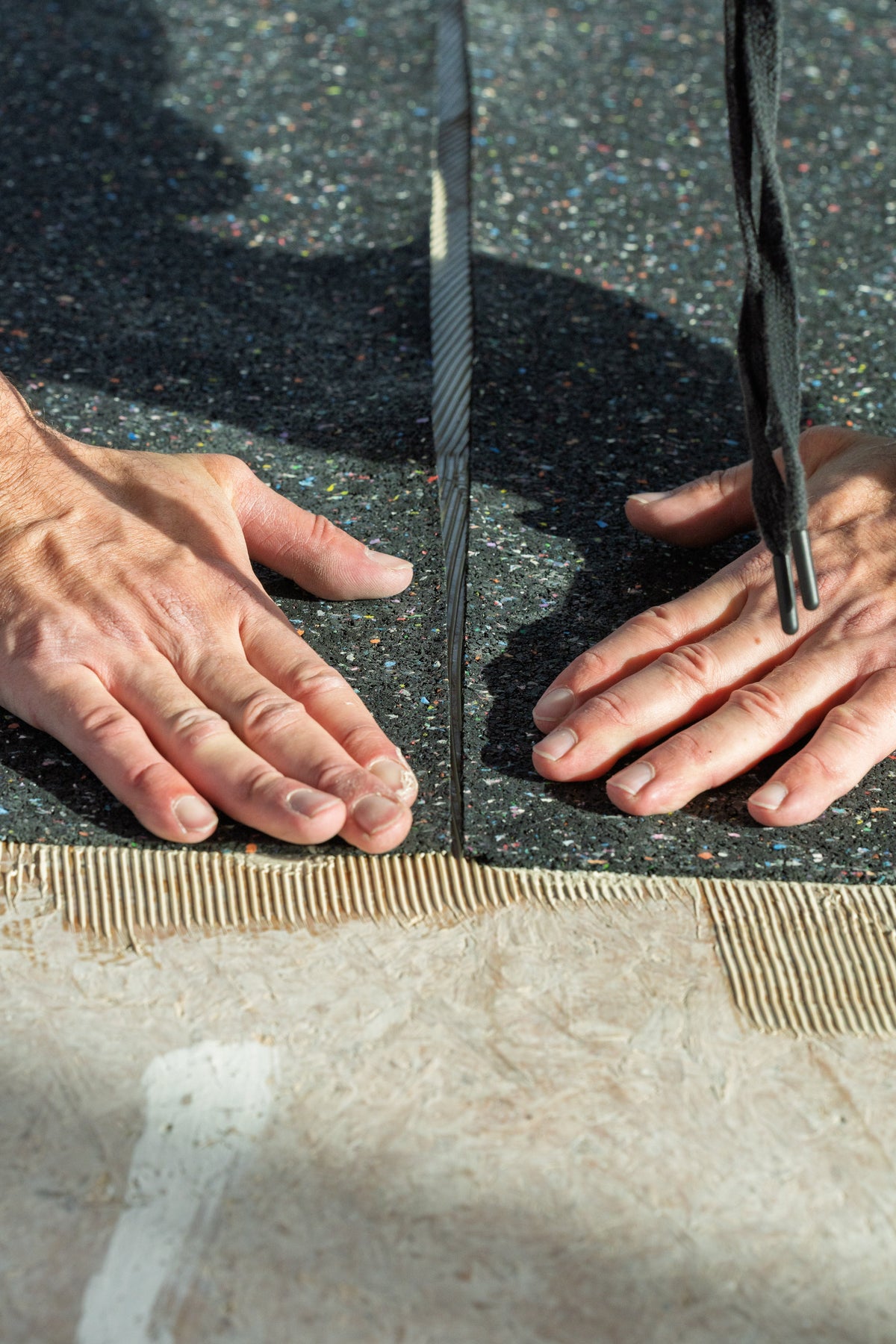
A floated floor over underlay is quicker and cheaper to lay, and it is also the floor that creaks and sounds hollow within a few seasons. A glued-down 20mm board costs more to install and feels like a solid floor for its life. The installation rate should say which method it is for.
7. What does the warranty actually cover?
Ask for the document, not the number of years. Look for what counts as a defect, what voids it (most exclude floors laid without moisture testing, or with the wrong adhesive), whether it transfers to a new owner, and who you email when something goes wrong. A 25-year warranty from a supplier who will not send the document is worth less than a 10-year one from a supplier who will.
8. What can they prove?
Slip resistance, reaction to fire, VOC emissions and, for apartments, impact sound: ask which have been tested by an independent laboratory and whether the reports are published. Ask whether FSC certification is standard on every board or available on request, and whether the claim is FSC 100% or FSC Mix. A supplier who publishes the reports and the certificates has nothing to manage in the answer.
Then compare the numbers
Put both quotes on the same footing: same area with the same waste, same installation method, freight and trims added to both, site coating added where it applies. Then divide by expected life. A floor that can be refinished four or five times is bought once; a floor that cannot be sanded is bought again in fifteen years, with the uplift, disposal and disruption that come with it. Cost per square metre per year of service is the number that decides it, and it usually favours the thicker board even at a higher price. Our cost guide sets out the ranges in the New Zealand market and what moves them.
Frequently asked questions
What should a timber flooring quote include?
Board thickness, wear layer and core; finish and where it is applied; area with waste allowance and pack count; freight, trims, stairs and adhesive; installation method; and the warranty document.
Why do two flooring quotes differ so much?
Usually because they are for different boards (a 2mm veneer against a 6mm wear layer), different installation methods (floated against glued), or different inclusions (waste, freight, trims and subfloor work in one and not the other).
How much waste should be allowed?
About 7 to 10 per cent for straight-lay plank, more for herringbone. Ask whether it is built into the quoted area.
Is a cheaper per-metre rate better value?
Only if it is for the same floor. A thin-veneer board at a low rate that must be replaced in fifteen years costs more over the life of the house than a thicker board that is refinished.
What questions separate quality from hype?
Wear layer in millimetres; where the finish is applied; glued or floated; who tests the slab and to what limit; can I see the warranty document; which tests are independent and published; is FSC standard or on request.
Last reviewed September 2026.