Ultra-Matt Factory Lacquer or Site-Applied Polyurethane: What the Finish Decides
Two floors of the same oak can look and behave quite differently because of what was put on top of them, and where. A Marchand floor arrives finished: UV-cured matt lacquer applied in the factory, cured under ultraviolet light, at a gloss level of 8 to 12 per cent. The alternative most New Zealanders have lived with is a raw or lightly sealed floor coated on site with polyurethane. This is what the choice decides.
Sheen
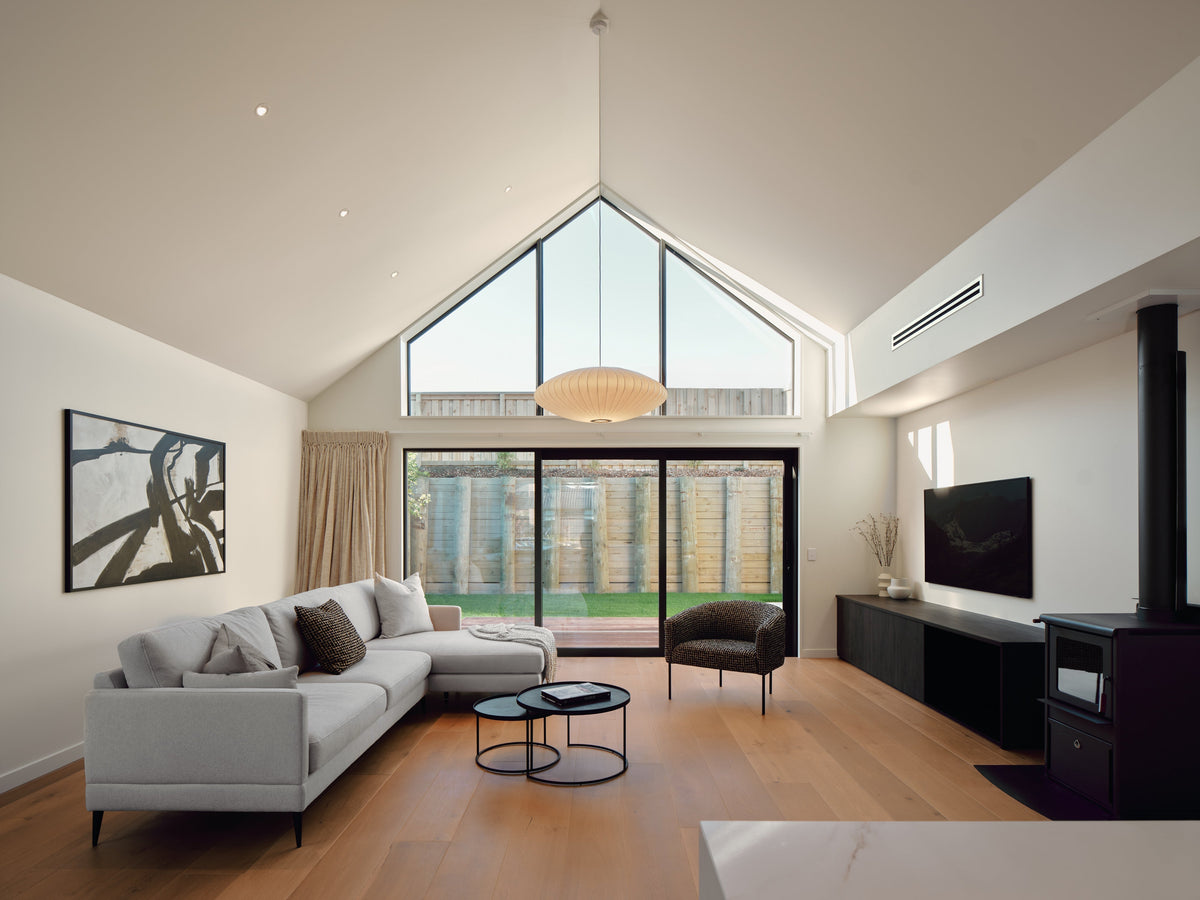
Ultra-matt means the lacquer is there and the eye does not see it. Light falls into the grain rather than bouncing off a film, so the floor reads as oak rather than as a coated surface, and it stays that way because there is no gloss to dull unevenly in the traffic lanes. Site polyurethane is available in matt, but it is a matt film over the timber; the difference is visible in raking light, and satin and gloss polyurethanes show every footprint.
Durability
A UV-cured lacquer is harder than an air-dried one because the cure is complete before the floor leaves the factory. Each coat, each cured, give a surface that resists scuffing and staining better than two or three thick coats cured in a house at whatever temperature the week happened to be. The KLUMPP household-substance test on our finish scored the top rating on eight substances and a four on mustard; the full result is on our Specification and Compliance page. No finish is scratch-proof, and we do not say ours is.
Repair
This is where the two part company most. A site-coated floor is repaired by recoating the whole room, because a patch shows. A factory-lacquered floor can be lightly abraded and recoated when it wears, and because the oak wear layer is 6mm it can be fully sanded and refinished four or five times in its life, with polyurethane, oil or lacquer, whichever the owner then prefers. A factory finish does not close off the site-coating option later; it defers it by a decade or two.
On site
Coating on site means sanding dust through the house, three days of fumes, a room that cannot be walked on, and a finish that depends on the humidity that week and the person holding the applicator. A factory-finished floor is laid, weighted for 24 hours, and walked on. Nothing is applied in the house, which matters for indoor air quality (our VOC report is published in full) and for the programme: the floor goes in after the painters rather than before them, and the builder hands over a finished surface rather than a phase.
Consistency
Every board of a colour is finished in the same plant on the same line, and each new batch is compared against a retained master before it is packed. A site coating varies with the coat count, the product and the applicator, and two rooms done a month apart can differ.
Cost
Site coating is a labour cost added to the floor: sanding, sealing and two or three coats, plus the days the house is out of use. The factory finish is in the board price. Over the life of the floor the larger difference is repair: recoating a room against replacing a floor.
When site coating still makes sense
Restoring an existing solid floor, matching a new area into an old site-coated floor, or a client who wants an oiled surface and accepts the maintenance that comes with it. For a new engineered floor in a New Zealand home, the factory finish is the better answer in almost every case.
Frequently asked questions
What finish is on Marchand flooring?
UV-cured matt lacquer, applied in the factory, at a gloss level of 8 to 12 per cent. Vuitton and the Noir wall board carry three coats of water-based lacquer.
Does a factory-lacquered floor need coating on site?
No. It is laid and walked on. Nothing is applied in the house.
Is ultra-matt harder to keep clean?
No. It is cleaned the same way as any lacquered floor, and it hides fine scuffs better than a satin or gloss surface. The care guide covers it.
Can a factory-finished floor be refinished later?
Yes. Lightly abraded and recoated when it wears, or fully sanded and refinished four or five times over its life, in any finish.
Is UV lacquer low-VOC?
The finished floor has been tested for VOC emissions to CDPH Standard Method V1.2 and the report is published in full on our Resources page. Because the lacquer is cured in the factory, nothing off-gasses in the house.
Last reviewed September 2026.