Oak Wall Boards or Painted GIB: What Each Wall Really Costs
Every oak wall gets compared with the same alternative: plasterboard, stopped and painted. It is the default wall in New Zealand. This article sets out what the painted wall actually costs per square metre once every trade is counted, what a Marchand wall board costs against it, and what the gap buys. All figures exclude GST.
What does a stopped and painted GIB wall cost in New Zealand?
Published New Zealand trade guides for 2026 put a new plasterboard wall, supplied, fixed, stopped to Level 4 and painted with a sealer and two coats, at roughly $80 to $115 per square metre.
That number is rarely seen as one figure because it is built from three trades, each quoting separately, each returning to site on a different day.
- Board, supplied and fixed. Standard 10mm plasterboard runs around $20 to $30 per sheet, and a fixer charges roughly $10 to $16 per square metre to hang it. Supplied and fixed, allow about $25 to $35 per square metre.
- Stopping. A Level 4 finish, the standard residential grade, sits at $30 to $45 per square metre including compound. A Level 5 finish, which is what a feature wall in raking light or under a dark colour needs if it is not to show every joint, runs $45 to $65.
- Paint. New plasterboard needs a sealer and two topcoats. On a new build with clean board, painters quote around $25 to $35 per square metre, labour and mid-range paint included.
Add those up and the wall most people think of as free costs $80 to $115 per square metre at Level 4, and $95 to $135 if it is finished to Level 5. Auckland rates sit at the top of those ranges; Christchurch and Queenstown are typically close to the middle.
What does a Marchand wall board cost?
Marchand wall and ceiling boards are $130 per square metre for the board, one rate across all twelve colours, supplied prefinished and ready to fix.
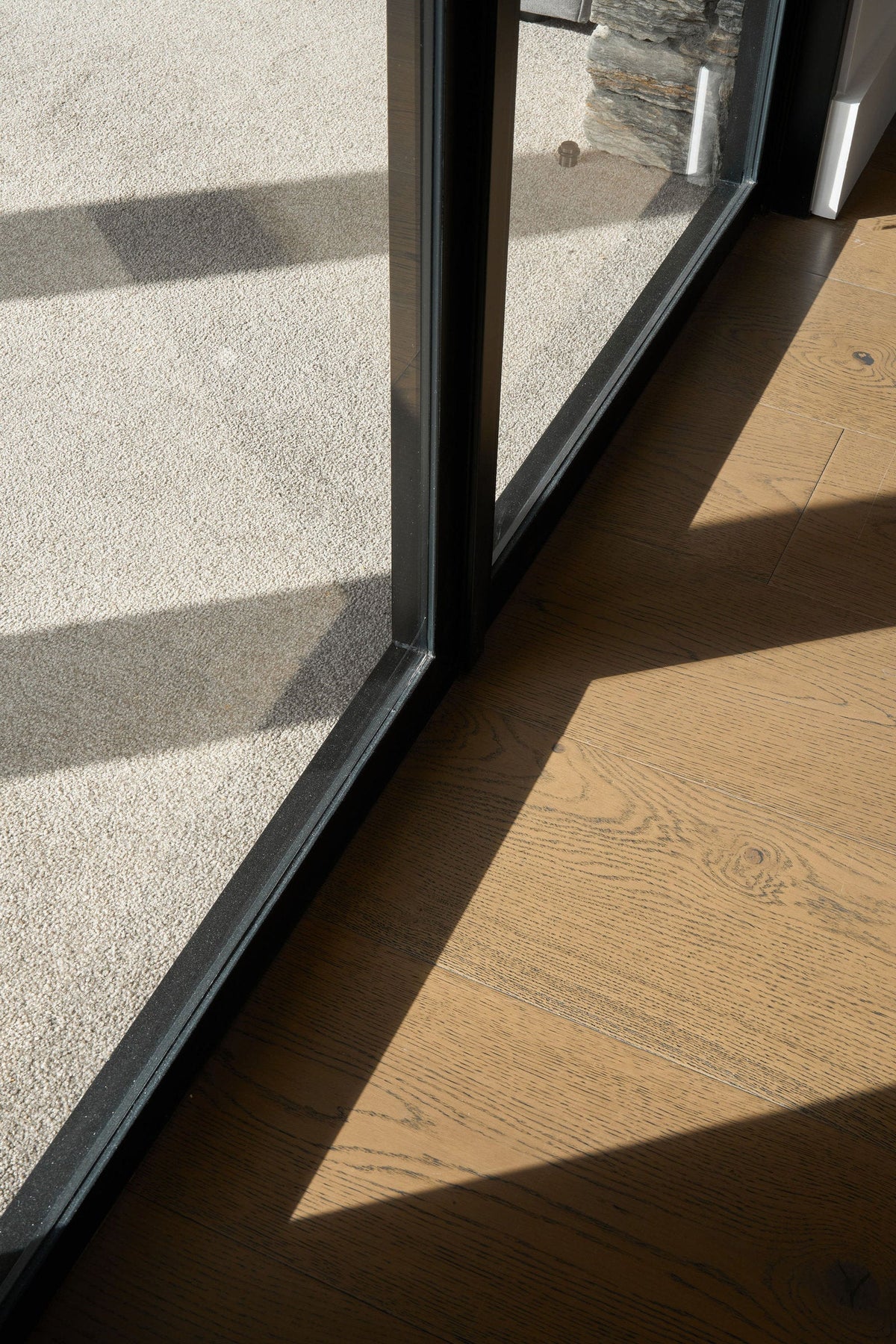
The board is 12mm engineered European oak, 120mm wide and 2400mm long, tongue and groove, with a UV-cured lacquer applied in the factory. Nothing is sanded, stopped, sealed or painted on site. Boards are sold in full packs of 3.456 square metres, so a wall is priced to the pack rather than the exact metre.
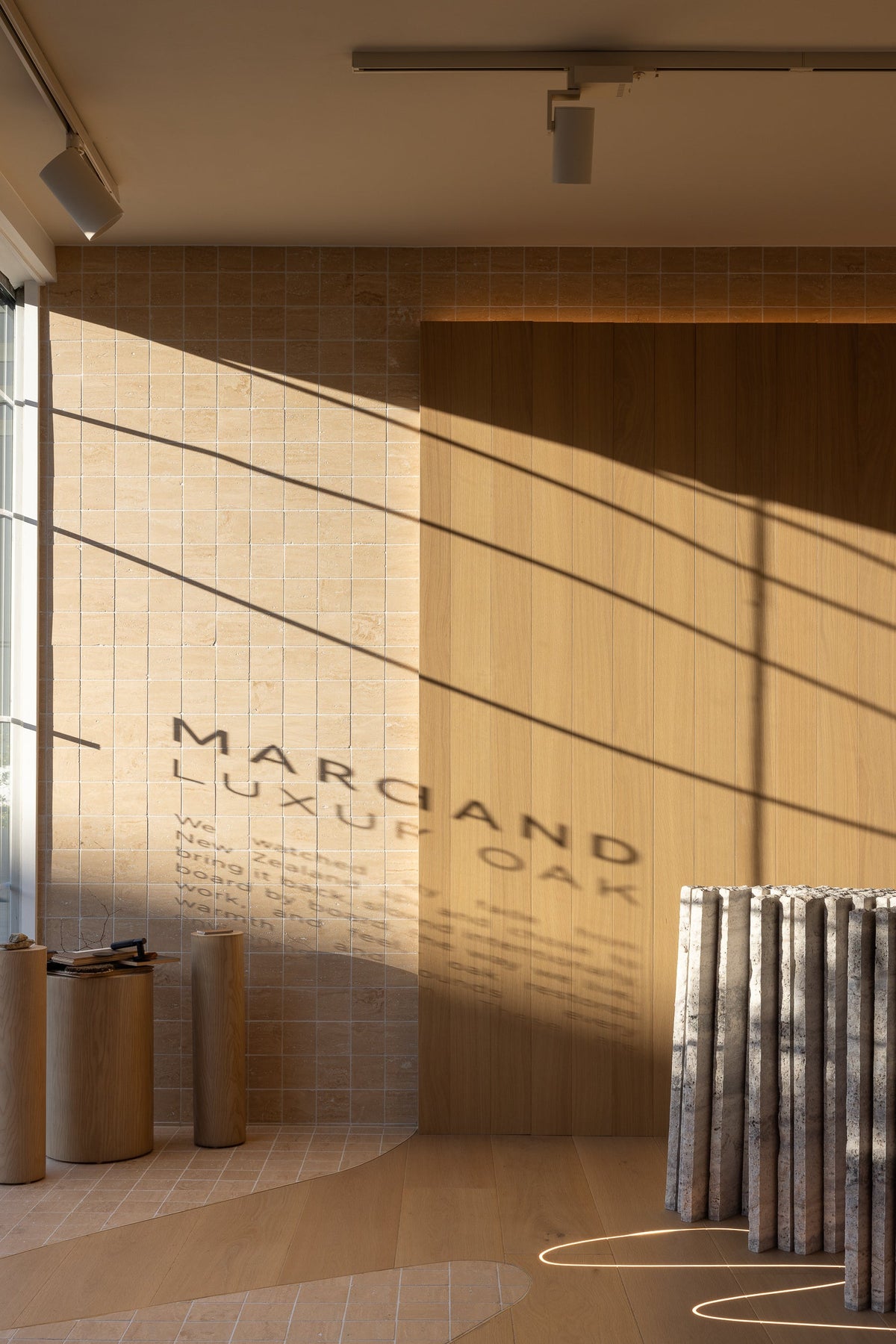
The boards fix directly to the substrate. They do not need plasterboard behind them. On a wall that is not carrying bracing or a fire rating, the oak board is the lining, so the plasterboard, the fixer, the stopper and the painter all come off the job.
The fixing is builder's work, not a specialist trade. The boards are tongue and groove, 2.4 metres long, and go up quickly. At a New Zealand builder's rate of $70 an hour, and a straight wall going up at around three to four square metres an hour, installation runs roughly $20 to $25 per square metre. That puts the finished oak wall at about $150 to $155 per square metre. Ceilings, returns and complex set-outs take longer, in the same way herringbone costs more to lay than plank.
The like-for-like comparison
| Finished wall, per square metre | Low | High |
|---|---|---|
| Plasterboard supplied, fixed, stopped to Level 4 & painted | $80 | $115 |
| Plasterboard supplied, fixed, stopped to Level 5 and painted | $95 | $135 |
| Marchand oak wall board, supplied and fixed to the frame | $150 | $155 |
Against a standard Level 4 wall, the oak carries a premium of roughly $35 to $75 per square metre. Against a Level 5 wall, which is the honest comparison for a feature wall, the premium narrows to about $15 to $60. On a 20 square metre feature wall, that is somewhere between $300 and $1,500 more than paint, depending on the finish level and the region.
That is a smaller number than most people expect. The reason is that the painted wall is not one cost. It is four trades and three site visits, and the oak replaces all of them with one builder and one day.
What the gap buys
The painted wall is not finished when the painter leaves. It is finished for now. Interior walls in a lived-in home are repainted roughly every eight to ten years, at $25 to $35 per square metre each time, with scuffs, chips and touch-ups in between. Over twenty years that is two repaints, or another $50 to $70 per square metre, before anything goes wrong. Add that to a Level 5 wall and the twenty-year cost of paint and the twenty-year cost of oak overlap.
An oak board is never repainted. The lacquer is applied under factory conditions, not in a room with the windows open, and the surface is the finished surface for the life of the house. Marks wipe off. The colour is the colour of the timber, not a coat sitting on top of it, and it carries a ten-year warranty in residential and commercial use.
The second thing the gap buys is the reason most people ask in the first place. A wall board that is exactly half the width of the floor board, in exactly the same colour, means every second join on the wall lines up with a join on the floor. The room reads as one piece of joinery. No paint colour does that.
Where to spend it
Oak costs more than paint on the day it goes up. The margin is narrower than the market assumes, and over the life of the wall it closes. The question is where a single plane of oak changes how a room reads: the wall behind a bed, the wall the stair rises against, a ceiling over a dining table.
Send us a plan and we will return a take-off with the wall area, pack count and an indicative board price, so the comparison is against your wall rather than a rule of thumb. Book a consultation or order the wall and ceiling sample box to see the boards in your own light first.
Plasterboard, stopping and painting rates are drawn from published New Zealand trade cost guides for 2026 and will vary by region, site and finish level. Where plasterboard is required for bracing or fire rating, it stays and the oak is fixed over it; ask us to confirm the detail for your wall. Marchand board pricing is current at September 2026. Last reviewed September 2026.