Hybrid and Vinyl Plank vs Engineered Oak: The Comparison Nobody Makes Honestly
Most of what is sold as wood flooring in New Zealand contains very little wood. Vinyl planks carry a photographic print of oak. Laminate carries a melamine surface. Some products described as engineered use a veneer thinner than a credit card.
None of that makes them bad products. It makes them different products, sold against timber on a comparison that is almost never made honestly. Here is the honest version.
What hybrid flooring actually is
Hybrid combines a rigid SPC (stone plastic composite) or WPC (wood plastic composite) core with a photographic image layer and a protective coating on top. That coating is typically 0.3mm to 0.55mm of urethane.
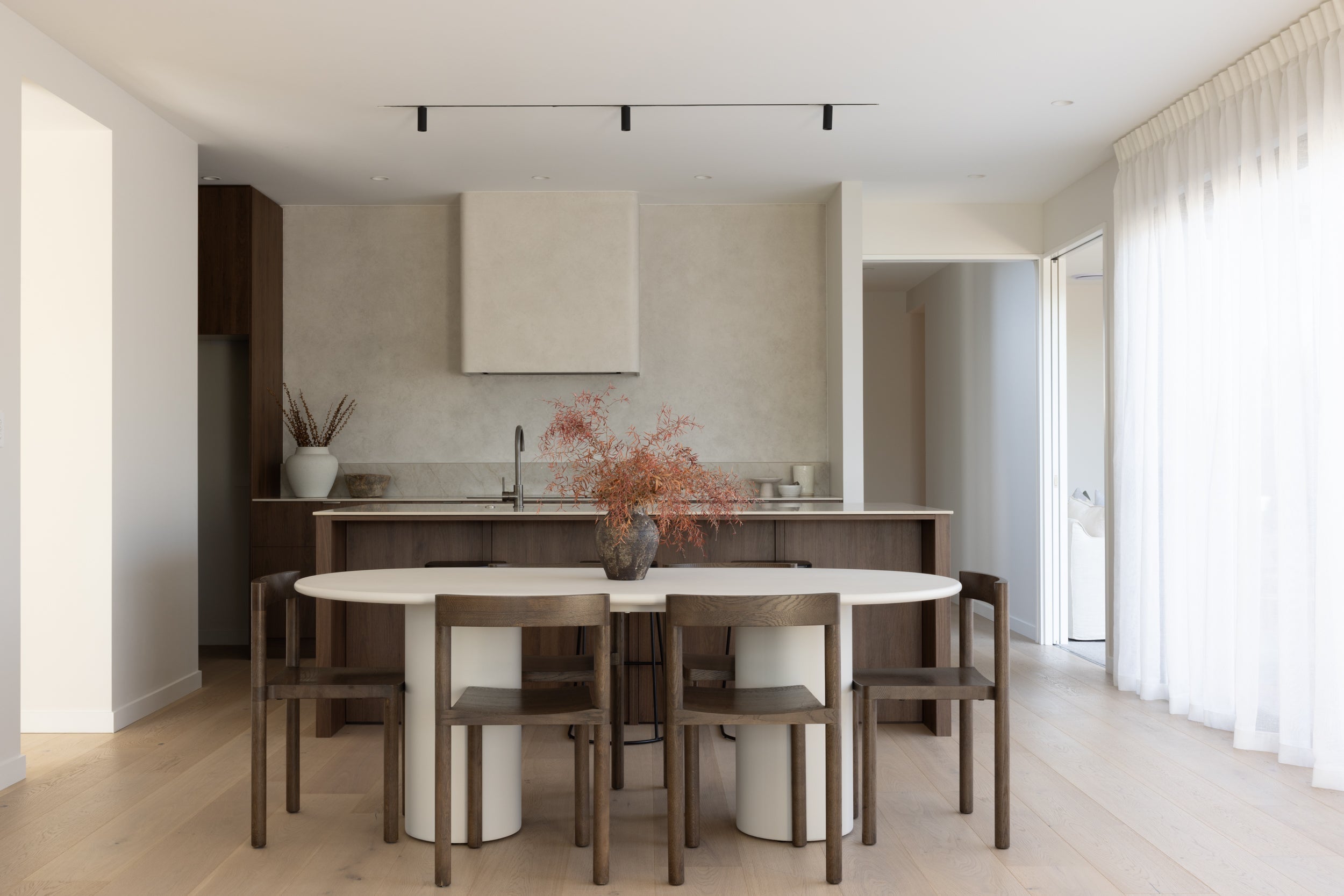
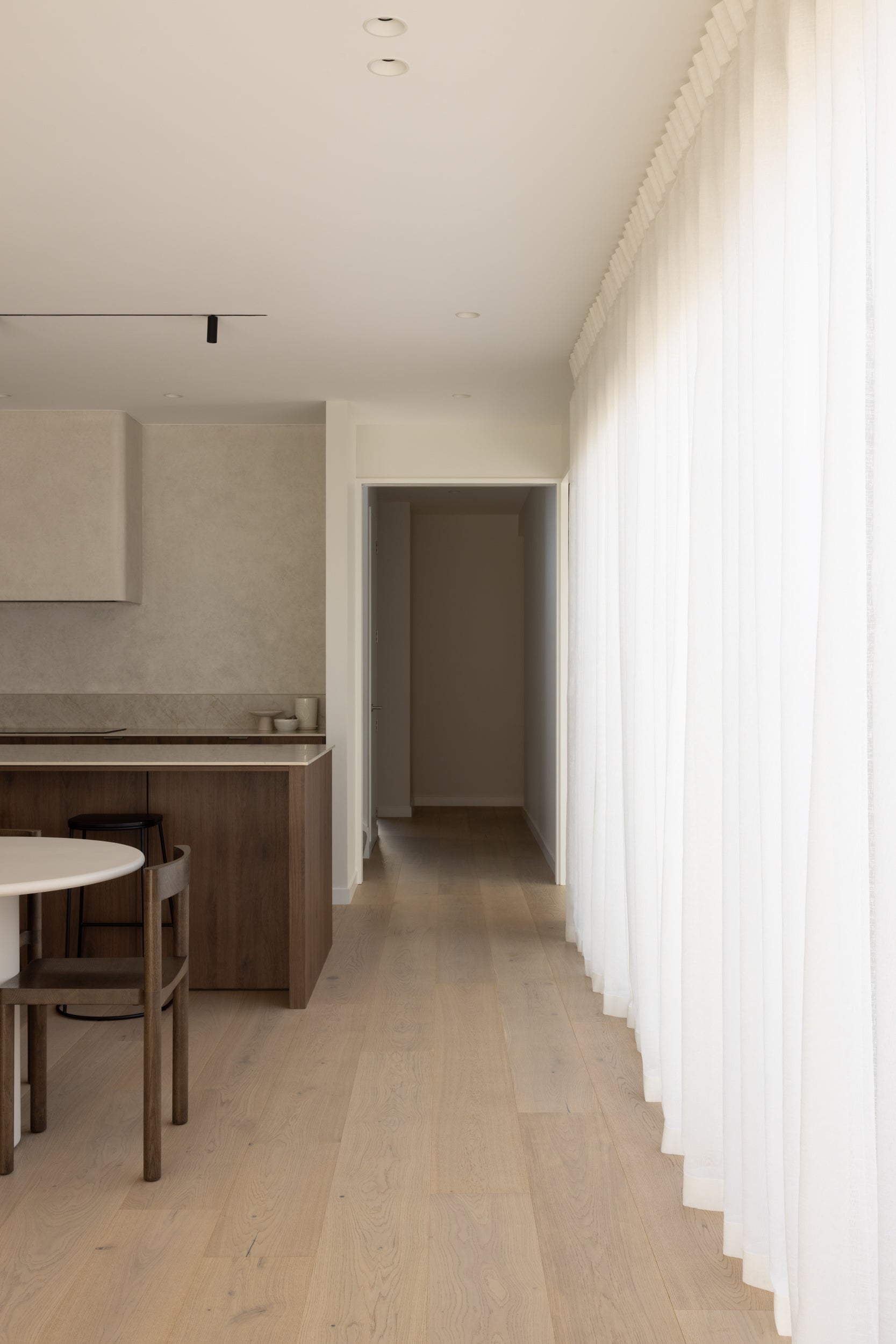
Engineered oak is a real European oak lamella bonded to a cross-laminated plywood core. Marchand boards carry a 6mm oak wear layer on a 14mm core, a 20mm profile in total. The construction detail is set out in the Technical Specifications.
The distinction that matters is not aesthetic. It is that one surface can be renewed and the other cannot.
The cost comparison, done properly
Hybrid product sits somewhere around $45 to $85 per square metre. Engineered oak runs considerably higher. On a showroom quote, that is the entire conversation.
It is also the wrong conversation, because flooring is not a single purchase. Hybrid cannot be sanded or refinished. When the wear layer degrades, and in a busy household that tends to happen within eight to fifteen years, the whole floor comes out. That is new product, removal labour, skip hire, disposal and fresh installation.
An oak floor can be sanded and refinished as many times as the wear layer allows. Ours runs to 6mm, so four or five. Refinishing costs a fraction of replacement, because you are buying labour and finish rather than a new floor and a landfill charge.
Run the two paths out over the life of a typical 120 square metre home and they converge, then cross. Two rounds of hybrid replacement will generally exceed one oak floor refinished twice, and at the end of it you still do not have a timber floor.
Moisture, and what E3 actually requires
Under Clause E3 of the New Zealand Building Code, a floor assembly has to manage moisture. Auckland averages around 75 per cent relative humidity. Canterbury sits nearer 65 to 70 per cent with sharper seasonal swings.
Hybrid is marketed as waterproof, and the core genuinely is. The joints are not the core. Water that penetrates a click-lock joint can pool beneath the floor, and because hybrid is almost always floated rather than glued, there is no adhesive seal between floor and substrate to stop it migrating. The result is a moisture problem you cannot see.
Engineered oak installed direct-stick over an appropriate vapour barrier forms a complete moisture management system. The adhesive bond prevents migration between layers and the cross-laminated core resists dimensional change. Our documented approach is published as an Alternative Solution for NZBC E3, with the wider compliance position set out in the same Resources library.
Both products depend entirely on subfloor preparation. Neither forgives a slab that was not moisture tested.
Underfloor heating
Both claim compatibility. The performance gap is real.
Hybrid's SPC core transfers heat adequately, but floating installation leaves an air gap between the floor and the heating element, which costs efficiency. Many hybrid products specify a maximum surface temperature of 28 degrees.
Engineered oak glued directly to the slab maintains contact with the system and conducts more efficiently. The governing rule is keeping the surface below 27 degrees, and commissioning the system gradually, at a rate confirmed against the heating manufacturer's guidance, so the floor acclimatises without thermal shock. Operating parameters are in the Underfloor Heating Declaration, and the commissioning sequence is covered in our underfloor heating guide.
Three mistakes buyers make
Comparing per square metre without comparing lifespan. A floor that lasts twelve years is not cheaper than one that can be sanded back and recoated four or five times. It is cheaper this month.
Reading waterproof as worry-free. A waterproof core does not protect joints, edges or the substrate beneath. In kitchens and bathrooms this produces confidence rather than protection.
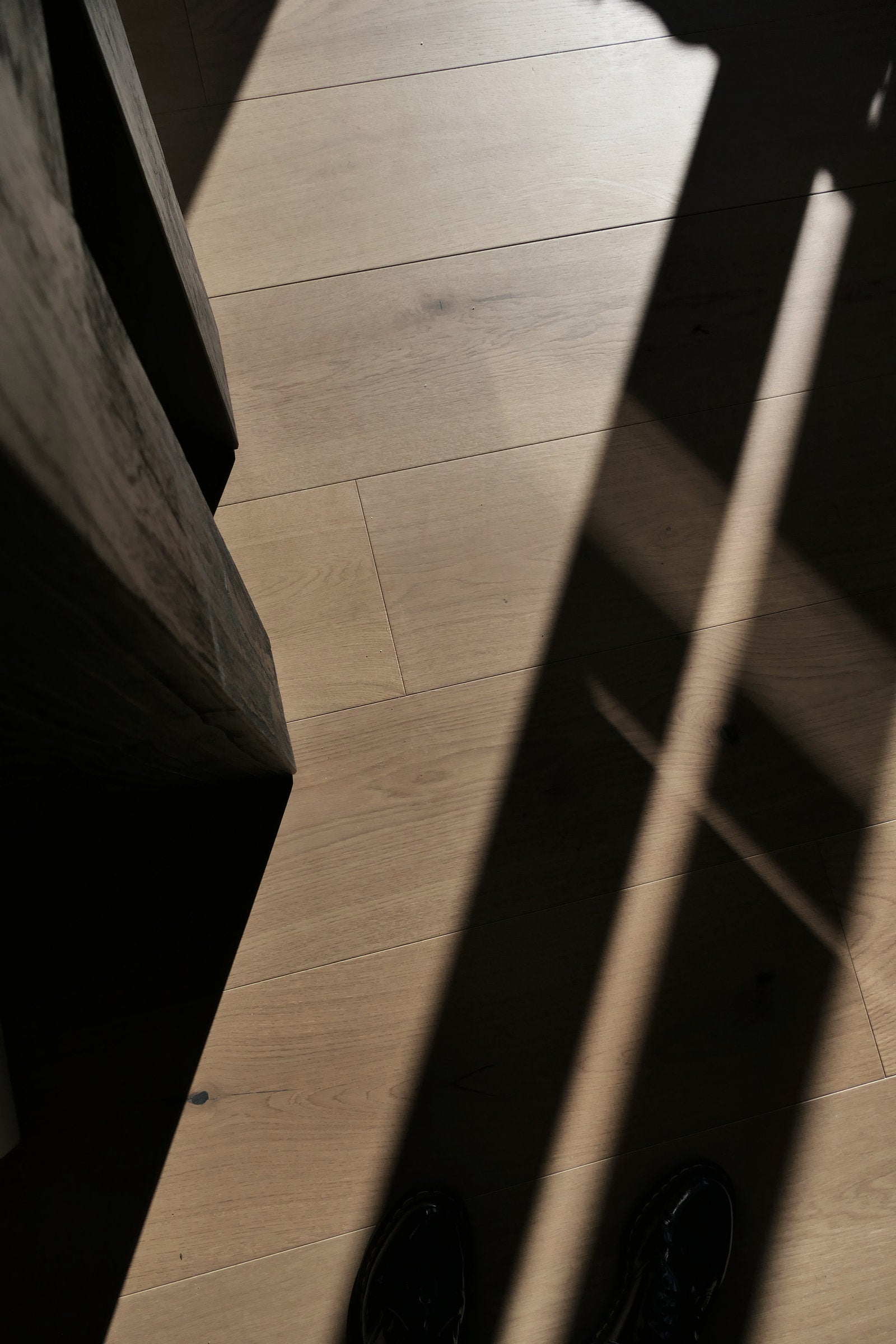
Choosing under showroom lighting. A printed layer is designed to look convincing in exactly those conditions. In daylight the repeat becomes visible, usually every few planks. Real oak has no repeat, because no two boards are the same, and it improves with age rather than only wearing down.
Where hybrid genuinely belongs
It would be dishonest to write it off. Hybrid is a sound choice for rental property where resistance to tenant damage matters more than a long horizon, for high-turnover commercial fitouts, for staged budgets where a clean finish now beats a better finish later, and for wet areas where timber is not appropriate under E3 in any case.
The distinction is one of intent. One product is a consumable. The other is part of the building.
The one question to ask
Before committing to any product sold as wood flooring, ask what the wear layer thickness is in millimetres above the tongue. Anything under 3mm cannot be meaningfully refinished. If the answer is not immediate and specific, you are not buying timber.
Our answer is published rather than described, alongside the full test documentation, the Warranty and the Installation Instructions, in the Resources library.
Judge it in daylight
The difference between printed grain and real grain is obvious in natural light and almost invisible under downlights. Order samples and put them on the floor of the actual room, or see full boards at the Christchurch, Auckland or Queenstown studio.
The range is in Flooring, and if you would like the specification checked before you commit, book a design consultation.