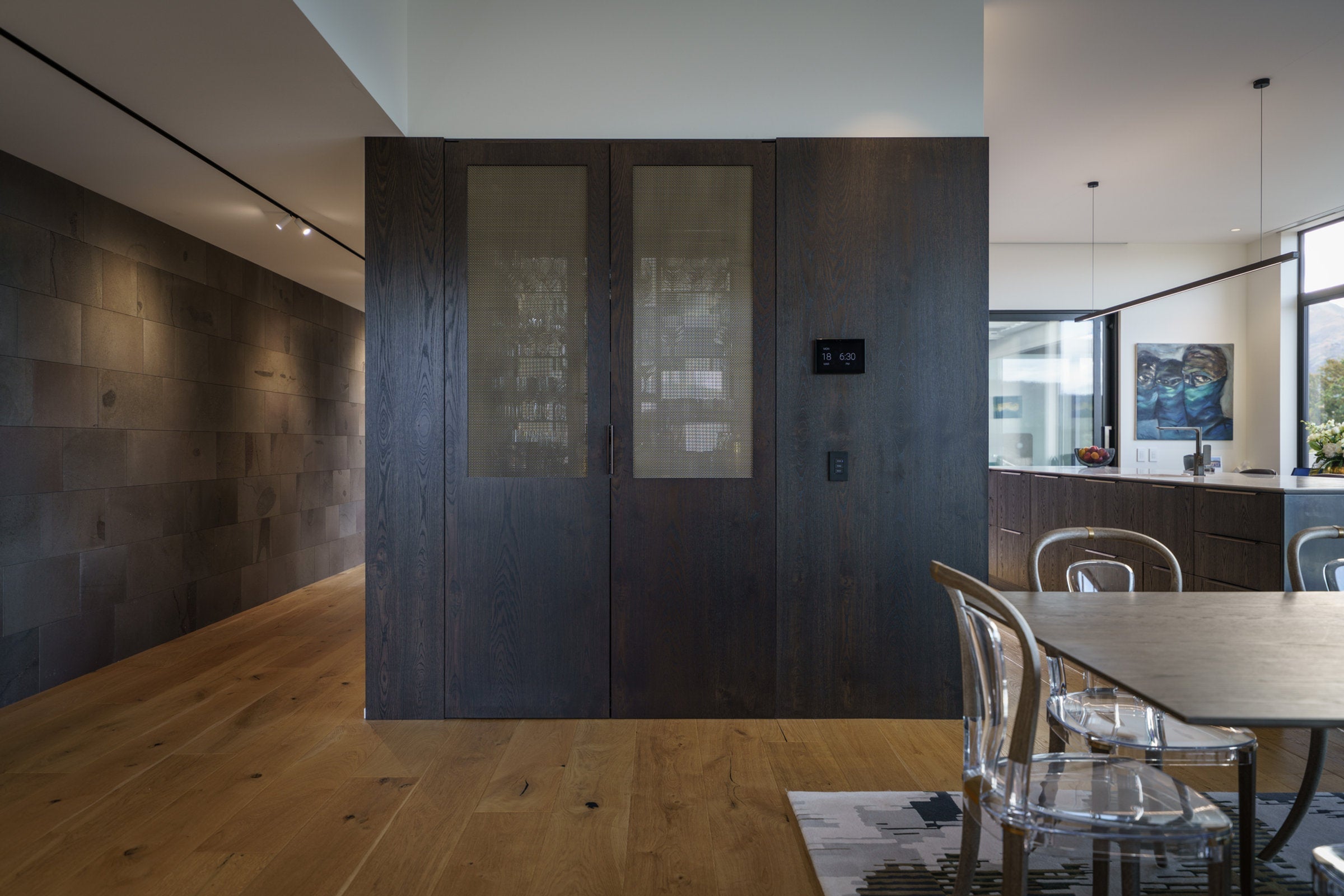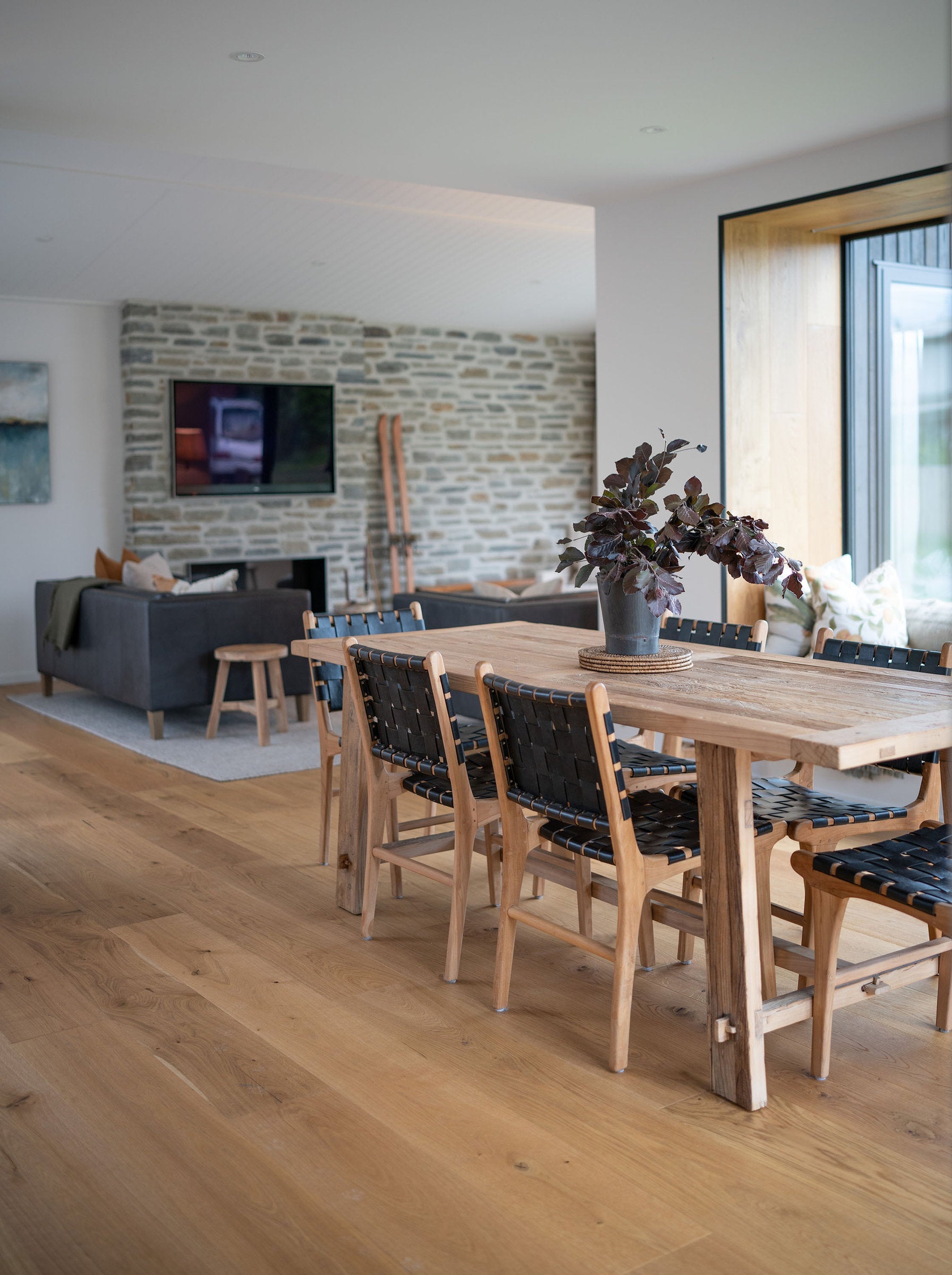
Does Wooden Flooring Fade?
Yes. All natural timber changes colour under prolonged sunlight, and any supplier who tells you otherwise is selling something printed.
What differs is the rate, and the rate is largely determined by the coating. It is worth understanding both, because a floor that ages evenly looks considerably better at year twenty than one that was never managed.
Why it happens
Sunlight carries ultraviolet radiation, and UV affects almost everything in a house. Fabric, artwork, cabinetry and paint all shift over time. Timber is no different.
European oak responds to its environment by lightening, darkening or shifting tone, depending on the finish. This is normal behaviour for a natural material, not a defect, and many people prefer the result. A floor that matures adds character in a way a stable synthetic surface cannot.
The variation is part of what makes the material read as real, which is the same argument we make about knots and grade.
What the coating does
No manufacturer can eliminate UV effects. The coating determines how slowly they arrive.
Marchand boards carry a UV cured lacquer system across the range. It works as a barrier against UV exposure, everyday wear, scratching and scuffing, household spills and surface staining.
When you are comparing floors, look past colour to the protection system. The coating is usually the difference between a floor that ages gracefully and one that looks tired early. Surface performance was assessed in the KLUMPP Stain Resistance Test back in 2015, and construction detail sits in the Technical Specifications.
Do darker colours fade faster?
Not faster, but more visibly. Natural and lighter oak tones show less noticeable change over time, because the shift is smaller relative to the starting point. Darker colours can show more obvious variation where sunlight falls directly.
This is worth factoring into colour selection for a room with large north-facing glazing, and it is one of the practical reasons to look at samples in the actual room rather than under showroom lighting. The full range is in Flooring.
How to protect the floor
Curtains, blinds or sheers. Sheers are the most popular answer because they filter UV while still letting the room feel bright. This is the single most effective intervention available.
Close the curtains when the house is empty. For holiday homes and baches this matters more than anywhere, because the floor is exposed for months with nobody managing it. The same visit that checks ventilation should close the blinds.
Leave rugs off for the first three months. This lets the floor develop its colour evenly before anything masks part of it. A rug laid on day one produces a permanent outline.
Move rugs and furniture occasionally. Small, periodic changes prevent a hard line forming between covered and exposed areas.
Consider UV-treated glazing. Where new joinery is being specified anyway, this is close to free.
The wider routine is in our guide to caring for an engineered oak floor and in the After Care Guide.
If a floor has aged unevenly
It is recoverable. Sanding back to bare oak resets colour across the whole floor, and there is enough depth in 6mm for four or five passes. No other flooring category offers that, which is why colour change in oak is a question of maintenance rather than replacement.
To see how a colour behaves in your own light, order samples, or view full boards at the Christchurch, Auckland or Queenstown studio.