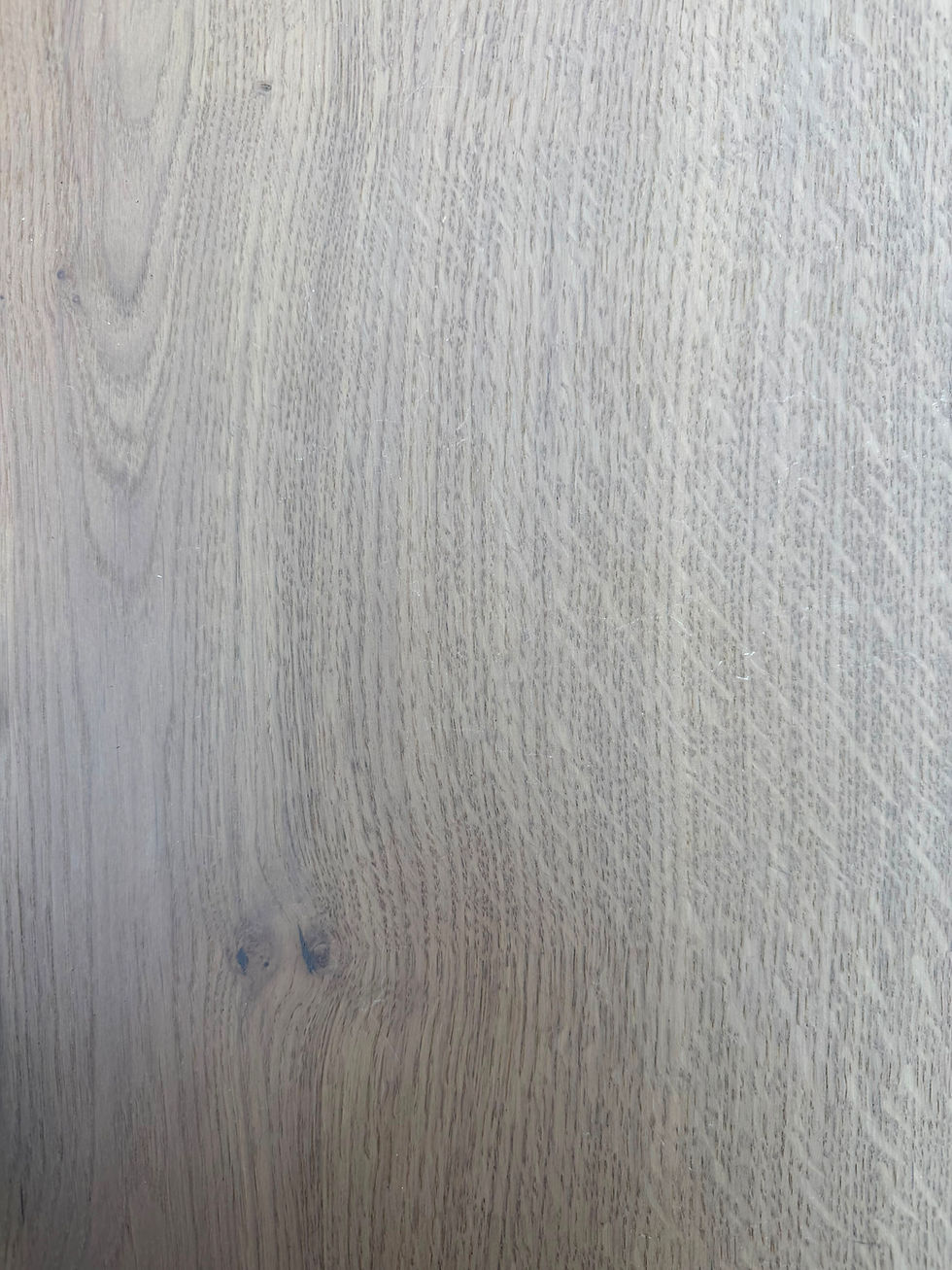
Wide Plank Oak Flooring NZ: What Buyers Get Wrong
- Apr 14
- 5 min read
Updated: Apr 17
You've just spent $18,000 on wide plank oak flooring for your Auckland home, and six months later, gaps wide enough to catch a coin have opened between every board.
Before you blame the boards, understand this: the width wasn't the problem. The construction was.

Wide plank oak flooring is the most requested specification in New Zealand's premium residential market right now. Boards 200mm and wider create fewer visual breaks, amplify natural grain patterns, and make rooms feel more expansive. But wider boards also move more — and in New Zealand's humidity-variable climate, that movement becomes the single biggest point of failure when the engineering is wrong. Here's what NZ buyers actually need to know before committing.
The Mistakes NZ Buyers Make With Wide Plank Oak Flooring
Mistake 1: Choosing solid timber in wide formats. Solid wide planks are a gamble in New Zealand conditions. Without cross-laminated stability, boards over 180mm in solid oak will cup noticeably within two winters in most North Island homes. Engineered construction isn't a compromise — it's the only responsible specification for wide formats in our climate.
Mistake 2: Ignoring subfloor moisture compliance. Under NZ Building Code E3 (Internal Moisture), all flooring installations must manage moisture to prevent damage to the building structure. For wide plank floors, this requirement becomes even more critical. A concrete slab reading above 75% relative humidity will push moisture into your boards from below, regardless of how well-engineered they are. Moisture testing before installation isn't optional — it's code.
The Hidden Cost of Going Cheap on Wide Boards
Here's a scenario we see regularly: a homeowner finds wide plank flooring at $95/m² — roughly half the price of a properly engineered product. The boards look identical on the showroom floor. They install beautifully on day one. But the wear layer is 2mm instead of 6mm, the plywood core is single-layer rather than cross-laminated, and the boards were kiln-dried to a generic standard rather than calibrated for Southern Hemisphere humidity ranges.
Within 18 months, those boards can't be refinished without sanding through the wear layer. Within three years, edge cupping appears. Within five, the floor needs full replacement — at which point the homeowner has spent more than double what a quality engineered floor would have cost upfront.
A thick wear layer (4–6mm of European oak) means your wide plank floor can be sanded and refinished two to three times across its lifespan. That's potentially 60+ years of service from a single installation. The most sustainable floor is the one you don't have to replace.
What Installers Wish You'd Ask Before Buying
Experienced flooring installers in New Zealand will tell you three things about wide plank specification that most showrooms skip:
First, ask about the core construction. Cross-laminated plywood cores with alternating grain directions are non-negotiable for boards over 200mm wide. Single-direction cores will telegraph every humidity shift directly into the surface.
Second, ask about the acclimatisation protocol. Wide planks need longer acclimatisation than narrow boards — typically 72 hours minimum in the room where they'll be installed, with HVAC running at normal settings. In Auckland's humid climate, this step is especially critical. Skipping it is the number one cause of post-installation callbacks.
Third, ask about adhesive specification. Full-spread adhesive application is strongly recommended for wide plank floors. Floating installations allow too much independent board movement at wider widths. The adhesive bonds each board to the subfloor, creating a unified system that resists dimensional change as a single mass rather than individual pieces fighting each other.
Engineered Wide Plank: The Premium vs Cheap Tradeoff
The engineered oak stability benefits become more pronounced as board width increases. At 240mm wide, you're specifying a floor that's as much an engineering product as it is a natural material. The cross-threaded plywood substrate, the calibrated kiln-drying, the precision tongue-and-groove milling — every element works harder in a wide format.
Premium engineered wide plank oak at $180–250/m² installed is not expensive when measured against its lifecycle. Compare it to replacing a cheap alternative twice in 20 years, including demolition, disposal, subfloor preparation, and reinstallation each time. The 30-year cost of the premium floor is typically 40–60% less than the budget option's total outlay.
The refinishing lifecycle advantage compounds this further. A 6mm oak wear layer can be lightly sanded and re-oiled every 8–10 years, refreshing the floor completely without replacement. Each refinish costs roughly $35–50/m² — a fraction of new installation. Over a 50-year period, that's three refinishes versus two or three complete replacements.
Choosing the Right Width for Your NZ Home
Not every room needs the widest possible board. Hallways and smaller bedrooms can feel overwhelming with 240mm planks. Conversely, open-plan living areas — which dominate modern NZ architecture — are where wide planks truly shine. The reduced number of joints creates a calmer, more cohesive visual plane that connects kitchen, dining, and living zones seamlessly.
For NZ conditions specifically, engineered boards in the 190–240mm range represent the sweet spot. Wide enough to deliver the visual impact, engineered enough to handle our humidity swings from Auckland's subtropical moisture to Canterbury's dry winters, and thick enough in the wear layer to offer genuine multi-generational longevity.
Can wide plank oak flooring handle Auckland's high humidity?
Yes — provided the boards are engineered with a cross-laminated core. Auckland's average humidity of around 75% demands dimensional stability that only engineered construction delivers at widths over 180mm. Solid wide planks are not recommended for Auckland conditions.
How wide is too wide for oak flooring in New Zealand?
With properly engineered construction, boards up to 240mm wide perform reliably across all NZ climate zones. The key factors are core quality, wear layer thickness, and correct installation method — not the width itself. Full-spread adhesive installation is recommended for boards over 200mm.
Do wide plank floors cost more to install than standard widths?
Installation cost per square metre is similar, but wide plank floors require more rigorous subfloor preparation and full-spread adhesive application. Budget an additional $5–10/m² for preparation compared to narrow-board floating installations. This investment prevents costly failures later.
Is wide plank oak flooring compatible with underfloor heating?
Engineered wide plank oak is one of the best flooring choices for underfloor heating systems, provided surface temperature stays below 27°C. The cross-laminated core distributes heat evenly while resisting thermal movement. Always confirm your heating installer coordinates maximum temperature settings with your flooring specification.
Considering wide plank oak for your NZ home? Talk to our specification team. We'll help you match the right board width, construction, and finish to your space — and your climate zone. Request a consultation at marchandonline.co.nz.