Hybrid Flooring vs Engineered Oak NZ: True Cost
- Apr 13
- 5 min read
Updated: Apr 17
Hybrid Flooring vs Engineered Oak in NZ: The Comparison Nobody Makes Honestly

What Hybrid Flooring Actually Is
Hybrid flooring combines a rigid SPC (stone plastic composite) or WPC (wood plastic composite) core with a photographic image layer and a protective wear layer on top. It looks like timber in showroom lighting. It feels like plastic underfoot. The “oak” you see is a photograph printed onto vinyl, sealed beneath a urethane coating typically 0.3mm to 0.55mm thick.
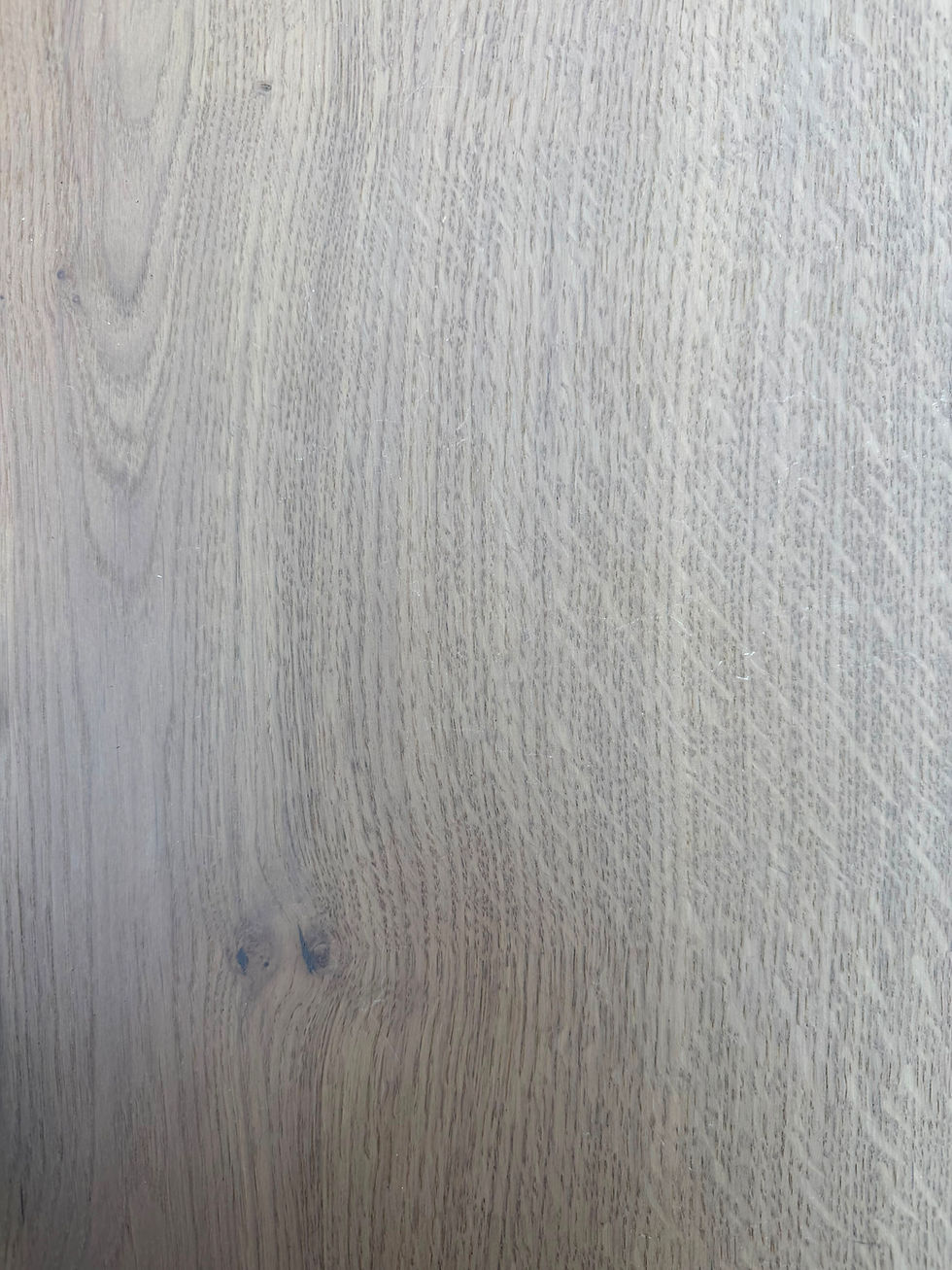
Engineered oak, by contrast, features a real European oak lamella — usually 4mm to 6mm thick at Marchand — bonded to a cross-laminated plywood core. It is actual timber, with the grain variation, warmth, and tactile character that only natural wood provides.
The Hidden Cost Homeowners Miss
Hybrid flooring costs roughly $45 to $85 per square metre for product, making it appear significantly cheaper than engineered oak at $120 to $280 per square metre. But flooring cost is not a single-purchase equation.
Hybrid floors cannot be sanded or refinished. When the wear layer degrades — and in high-traffic areas of a busy NZ household, this happens within eight to fifteen years — the entire floor must be replaced. That means new product, removal costs, skip hire for disposal, and fresh installation labour.
A quality engineered oak floor with a 4mm-plus oak lamella can be sanded and refinished three to five times over its lifetime. At a refinishing cost of approximately $35 to $55 per square metre (compared to $150-plus per square metre for full hybrid replacement), the long-term economics shift dramatically. Over a 50-year period in a typical 120-square-metre NZ home, a single engineered oak floor refinished twice costs roughly $20,000 to $28,000 total. Two rounds of hybrid replacement over the same period costs $24,000 to $36,000 — and you still do not have a real timber floor at the end of it.
The most sustainable floor is the one you don’t have to replace.
Performance in NZ Conditions
New Zealand’s climate varies dramatically from north to south, and both hybrid and engineered oak respond differently to local conditions.
Auckland’s average relative humidity sits around 75%, creating a consistently damp environment. Canterbury ranges between 65% and 70%, with sharper seasonal swings. Under NZ Building Code clause E3 (Internal Moisture), all flooring installations must manage moisture transfer from the subfloor to prevent structural damage.
Hybrid flooring is marketed as waterproof, which is technically true of the core material. However, water that penetrates click-lock joints can pool beneath the floor, creating hidden moisture problems that compromise the subfloor and potentially breach E3 requirements. Because hybrid is almost always floated rather than glued, there is no adhesive seal between the floor and the substrate to prevent moisture migration.
Engineered oak installed using the direct-stick (glue-down) method creates a complete moisture management system when paired with an appropriate vapour barrier. The adhesive bond prevents moisture migration between layers, and the cross-laminated plywood core provides up to fifteen times more dimensional stability than solid timber. This makes engineered oak the more reliable long-term solution for NZ’s variable humidity — provided it is installed correctly.
The Underfloor Heating Question
Both products claim compatibility with underfloor heating, but the performance gap is significant.
Hybrid flooring’s SPC core transfers heat adequately, but the floating installation method creates an air gap between the floor and the heating element that reduces efficiency. Many hybrid manufacturers specify a maximum surface temperature of 28°C, and some NZ installers report that click-lock joints expand and contract more visibly under heated conditions.
Engineered oak glued directly to the slab conducts heat more efficiently and maintains better contact with the heating system. The critical rule — keeping surface temperature below 27°C — protects both the timber and the adhesive bond. At Marchand, we recommend a gradual temperature increase of no more than 2°C per day when commissioning underfloor heating under oak floors. This eliminates thermal shock and ensures the floor acclimatises evenly.

Three Mistakes NZ Buyers Make When Comparing
Mistake 1: Comparing product cost per square metre without lifecycle cost. A $60/m² hybrid floor that lasts twelve years is not cheaper than a $180/m² engineered oak floor that lasts sixty. Yet most NZ showroom quotes present only the upfront number.
Mistake 2: Assuming “waterproof” means worry-free. Hybrid’s waterproof core does not prevent water damage at joints, edges, or the subfloor beneath. In Auckland bathrooms and kitchens where splashing is frequent, this creates a false sense of security that leads to deferred maintenance and hidden damage.
Mistake 3: Choosing based on showroom appearance. Hybrid floors look impressive under showroom lighting because the photographic layer is designed to. But unlike real oak, they do not develop character over time. Engineered oak ages gracefully — developing a richer patina that enhances with each year, while hybrid surfaces only deteriorate.
When Hybrid Flooring Makes Sense
To be fair, hybrid is a legitimate choice in specific situations: rental properties where durability against tenant damage matters more than longevity, commercial spaces with high turnover, or budget-constrained projects where the priority is a clean finish now rather than a lifetime investment. It is also genuinely excellent in wet areas where timber is not appropriate under NZ Building Code E3.
But for owner-occupied homes — especially premium renovations and new builds where the flooring sets the tone for the entire interior — engineered oak delivers a fundamentally different result. One is a consumable. The other is an investment.
What Installers Know (But Rarely Say)
Experienced NZ flooring installers will tell you privately that hybrid flooring callbacks are increasing. The most common issues: joint lifting in kitchens, edge peaking near exterior doors, and visible wear patterns in hallways within three to five years. These are not defects — they are the natural limitations of a product designed for a different price point and purpose.
A properly specified and installed engineered oak floor, by contrast, generates almost no callbacks when three conditions are met: correct moisture testing before installation, appropriate adhesive selection for the substrate, and strict adherence to the 27°C underfloor heating limit. The floor does the rest.
Is hybrid flooring cheaper than engineered oak in NZ?
Upfront, yes — hybrid typically costs $45 to $85/m² versus $120 to $280/m² for engineered oak. But hybrid cannot be refinished and must be fully replaced every 8 to 15 years. Over 30-plus years, engineered oak’s refinishing lifecycle makes it the more cost-effective choice for owner-occupied homes.
Can I use hybrid flooring with underfloor heating?
Most hybrid products are rated for underfloor heating up to 28°C surface temperature. However, the floating installation method creates an air gap that reduces heating efficiency. Engineered oak glued directly to the slab provides better heat transfer and more stable performance, provided the surface stays below 27°C.
Does hybrid flooring look as good as real oak?
In a showroom, hybrid can look convincing. In a home with natural light, the difference is immediately apparent. Hybrid uses a printed photographic layer that repeats patterns every few planks. Engineered oak features genuine timber grain — every board is unique, and the floor develops a richer character over time rather than degrading.
Which flooring is better for Auckland’s humidity?
Auckland’s 75% average humidity demands careful moisture management under NZ Building Code E3. Engineered oak with a cross-laminated core and glue-down installation manages humidity changes more reliably than floating hybrid, which can trap moisture beneath the floor. Both require proper subfloor preparation, but engineered oak’s bonded installation provides a more complete moisture management system.
Choosing between hybrid and engineered oak is ultimately a question of time horizon. If you are building or renovating a home you plan to live in, the floor beneath your feet should match that commitment. Talk to our team about which Marchand oak profile suits your project — we will help you get the specification right from the start.