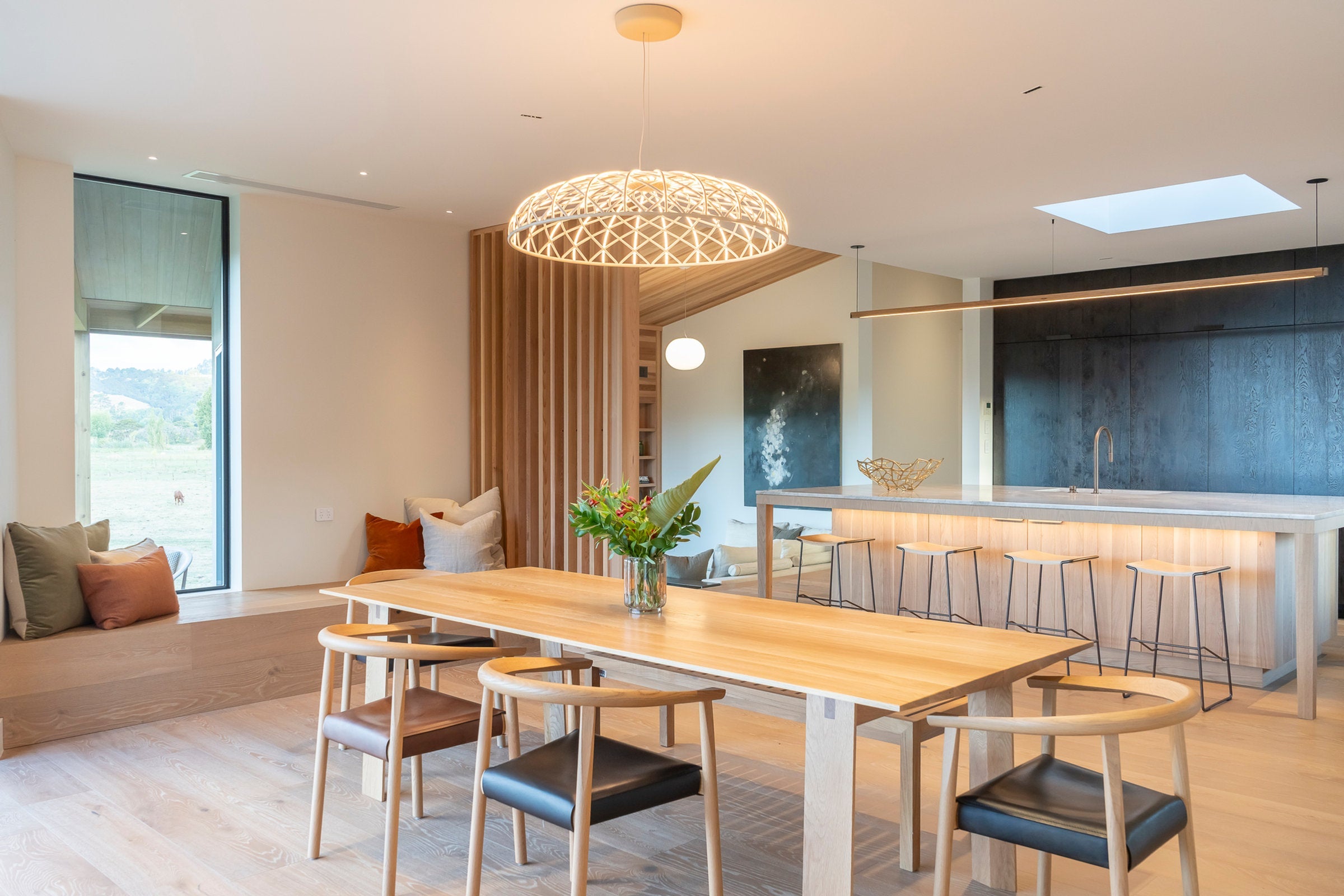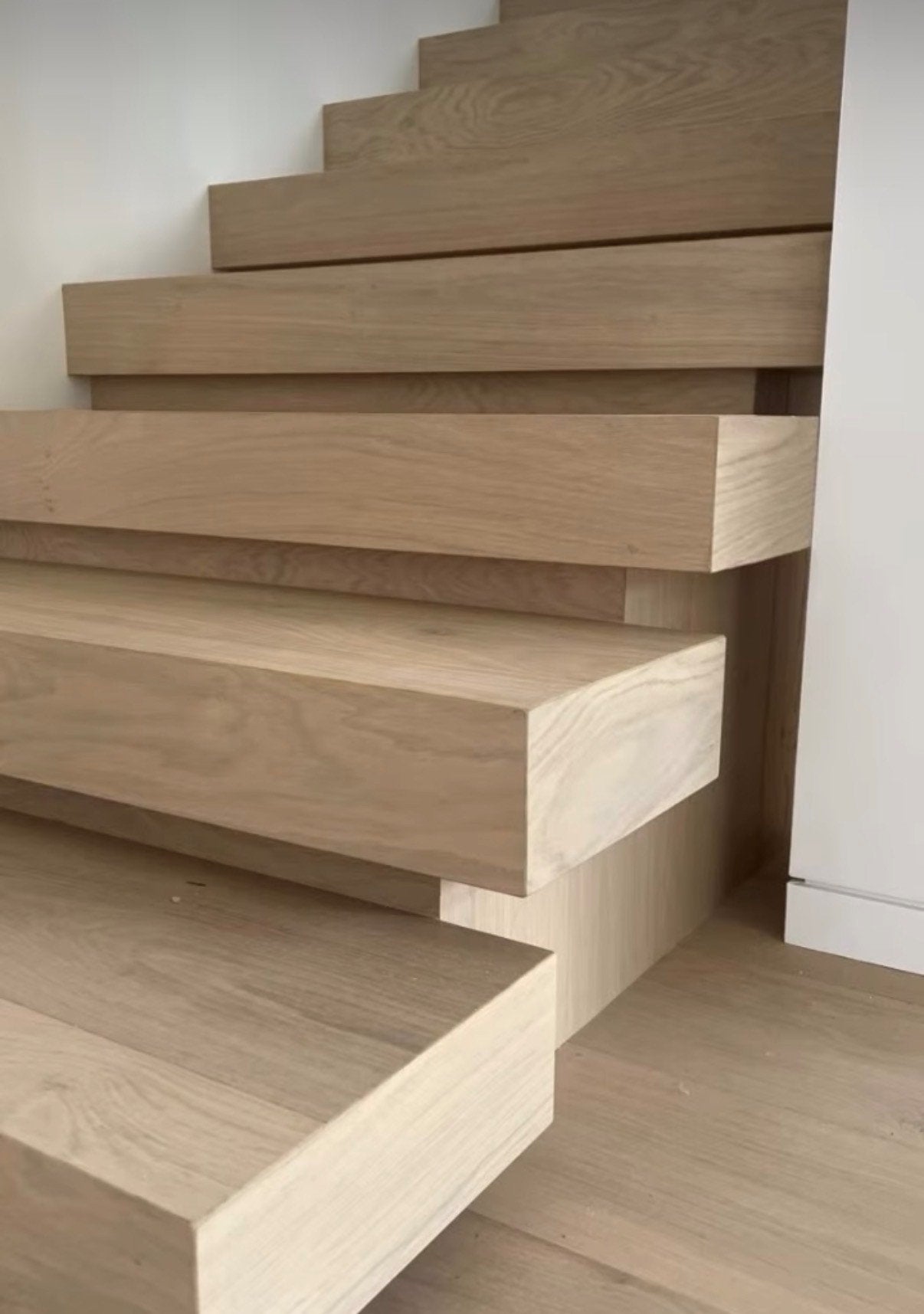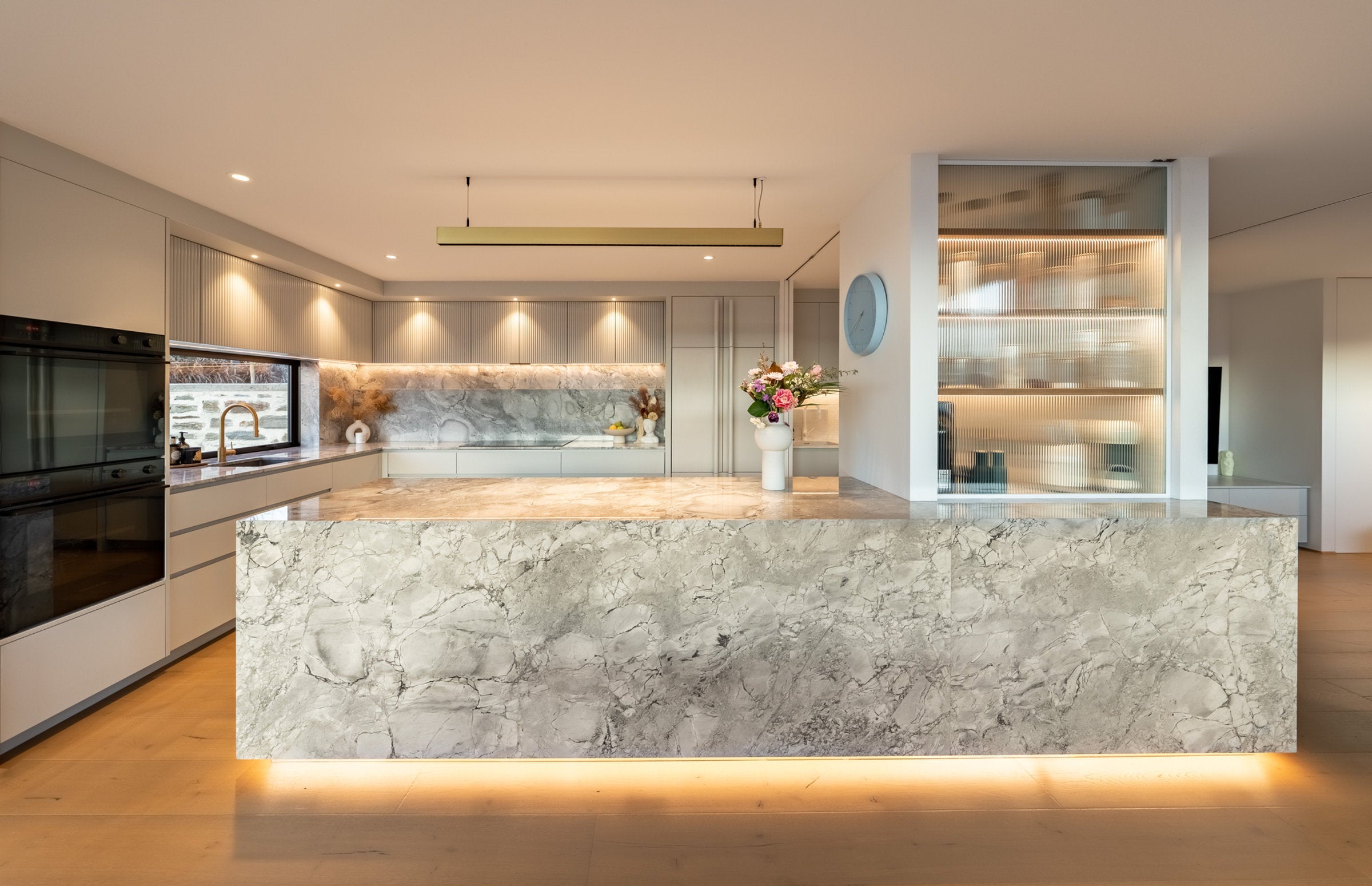
Engineered Oak Flooring Cost NZ: What Drives the Price
Engineered oak flooring is priced on grade, width, wear layer, finish and installation complexity. Understanding what drives each helps you budget properly and, more importantly, compare quotes that are actually comparable.
What the New Zealand market looks like
Across the New Zealand market, engineered oak product typically ranges from around $90 to $280 per square metre, with professional installation adding roughly $100 per square metre, depending on method and subfloor preparation. All figures on this page exclude GST.
That installation rate is for straight-lay plank. Herringbone is the exception, because the set-out takes considerably more labour, so installation can run up to double the plank rate.
The product band is very wide, and the reason is that the products at either end are not the same thing. Entry-level boards commonly carry a 2mm wear layer on a single-layer core. Premium specification runs to a 6mm wear layer on a cross-laminated core. Both look identical in a showroom. Only one can be sanded and recoated.
What you are paying for
Engineered oak bonds a genuine European oak wear layer to a stable core. Unlike solid timber, this construction resists the expansion and contraction caused by seasonal humidity change, which is what makes it suited to New Zealand conditions.
The cost drivers, in rough order of impact:
- Board width and length. Wider and longer boards demand higher grade logs and generate more milling waste. This is the single largest driver
- Wear layer thickness. Market products run from about 2mm to 6mm. A thicker oak layer means more refinishes across the floor's life
- Grade. How much natural character, knotting and colour variation is permitted
- Finish. Smoked, brushed, bandsawn and hand-scraped surfaces each add process steps
- Format. Herringbone costs the same per square metre as plank in product, and up to double to lay
- Subfloor preparation. Levelling, moisture remediation and vapour barriers, which vary enormously by site
How Marchand prices
We price flooring at a single rate across every colour. Blanc costs the same as Chocolat, and Picasso costs the same as Bordeaux. Your selection should be driven by the design, not by which finish happens to be cheaper.
For an indicative price against your own plans, book a consultation or send us your drawings.
The cost most quotes leave out
Price per square metre measures a transaction, not a floor. The unit that matters is cost per square metre per year of service.
Four or five times over the life of the floor, you get to buy labour instead of a floor. That is what a 6mm wear layer buys you. A floor that is refinished instead of replaced can cost considerably more per square metre and still break even, before you count uplift, disposal, substrate remediation and the disruption of doing the job again.
Refinishing, by comparison, typically runs around $110 per square metre plus GST across the market, including colour or tint. That is what you pay instead of replacement when a floor can be sanded, and it buys back the surface without the product, the uplift or the landfill charge.
NZ Building Code E3 compliance
Clause E3 governs internal moisture management. For flooring this means proper moisture barriers on concrete slabs, adequate ventilation for timber subfloors and correct underlay specification. Your installer should test subfloor moisture before laying, with readings below 75% relative humidity for concrete.
Our documented Alternative Solution for E3 is published on our Resources page, alongside the VOC report and independently run slip resistance, acoustic and fire load results.
Underfloor heating
Engineered oak works with both hydronic and electric systems. Maintain a maximum surface temperature of 27 degrees Celsius, install floating or glue-down, never nailed, and commission the heating for at least two weeks before flooring is laid. Detail in our underfloor heating guide.
Installation
Professional installation typically takes three to five days for a standard home, including subfloor preparation, moisture testing, underlay and the flooring itself. Herringbone takes considerably longer, which is where the difference in rate comes from.
Subfloor preparation is the critical phase. Concrete must be level within 2mm over 2 metres, and cracks or moisture issues addressed before laying begins. Full detail is in our Installation Instructions.
Next steps
Order a sample board, browse the full range, or see how the finishes read in completed homes across our projects.