Do You Need Expansion Gaps with European Oak Flooring?
- Nov 20, 2025
- 4 min read
The Engineering Behind Marchand 20mm Boards When specifying or installing European oak flooring, one of the most debated topics is whether an expansion gap is required around the perimeter of a room. Many installation guidelines in New Zealand state that engineered timber floors must include a movement allowance, typically 10 to 15 millimeters, to accommodate seasonal expansion and contraction.
This guidance is widely used and is appropriate for solid or not cross laminated products. However, not all engineered timber floors are manufactured the same way. Some floors are designed to move more than others due to the way the plywood substrate is constructed. The more dimensional movement a product is likely to experience, the more important the expansion gap becomes.

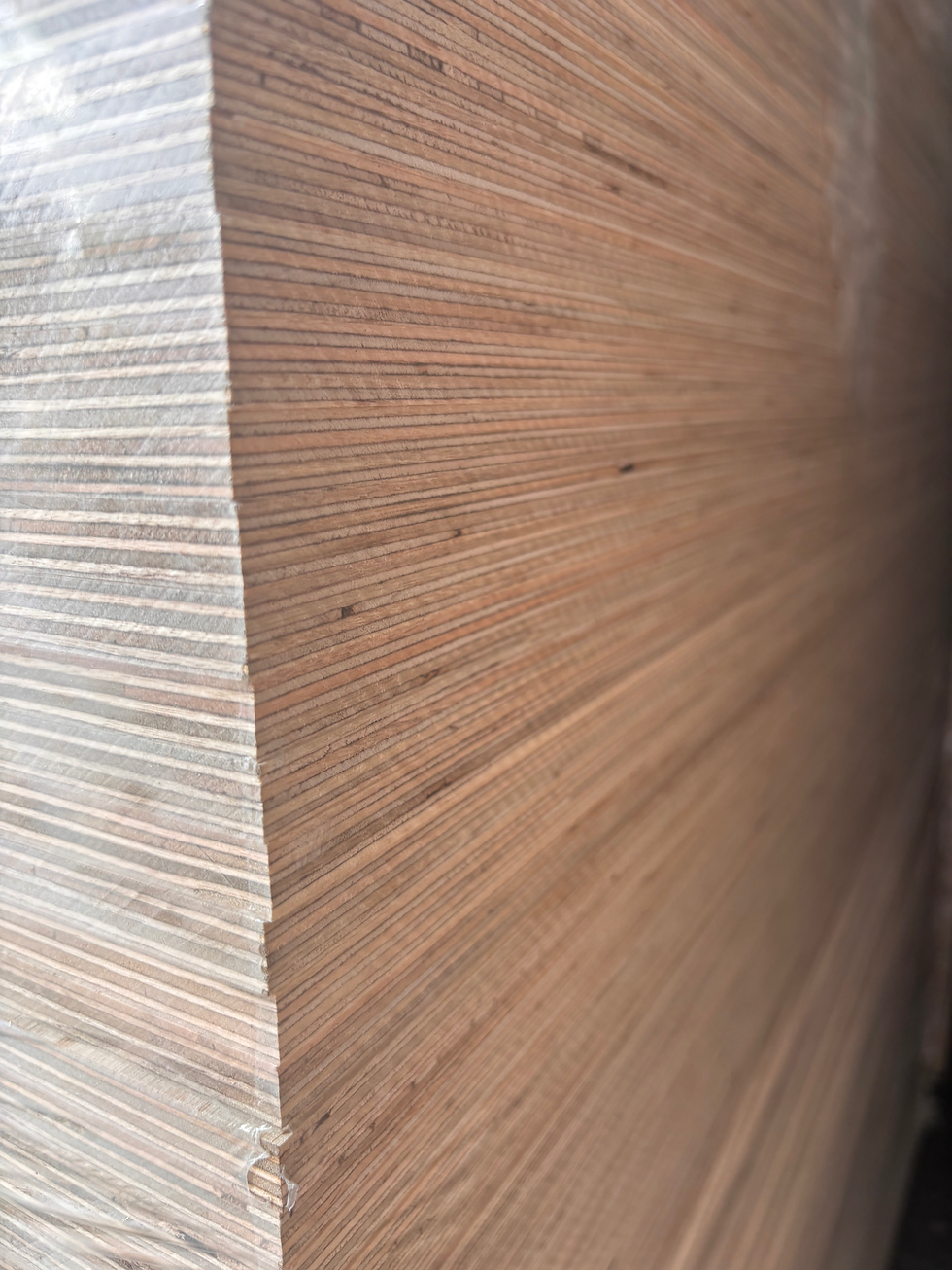
At Marchand Luxury Oak, our 20mm engineered European oak flooring is designed differently. Due to its 6mm solid oak wear layer and 14mm fully cross-laminated eucalyptus ply core, our boards have extremely low and predictable movement. This stability enables installation without perimeter expansion gaps when installed according to our guidelines.
This article explains the reasoning behind this engineering approach and why it differs from traditional practices and why expansion gaps with Marchand European Oak Flooring are not necessary.
Why Many European Oak Floors Require Expansion Gaps
Even when engineered, timber is still a natural material that responds to changes in environmental humidity. As moisture increases, timber can swell; as it decreases, timber can shrink. If a floor expands and there is no room to move, boards can push against fixed walls or joinery, causing:
Cupping or tenting
Squeaking or friction points
Gapping between boards
Damage to tongue-and-groove joints
This is why many suppliers of engineered timber recommend leaving a perimeter expansion gap. It is a protective measure that reduces the risk of floor failure where stability is uncertain.
Industry installation manuals—for example, widely referenced installation guidance used across New Zealand—often advise an expansion allowance around all vertical junctions. These are not incorrect recommendations. They are appropriate for their engineered flooring products.

Not All Engineered Oak Flooring Is Constructed the Same
The key variable is the plywood substrate beneath the oak wear layer. High quality Engineered flooring is typically made from several layers of timber laminated together. In some products, these layers are not fully cross-laminated, which means the grain directions are not consistently opposed. When this happens, the plywood can move more as humidity changes, leading to a need for expansion gaps around the perimeter.
This is a common way to reduce production cost in the timber flooring industry, particularly as some suppliers aim to maximise their margin. Lower manufacturing cost, however, this can mean reduced stability and greater movement risk.
In contrast, Marchand specifies a 14mm cross-laminated eucalyptus plywood substrate for all 20mm flooring, which is designed to resist dimensional change. This is why expansion gaps with Marchand European Oak Flooring are not necessary.
Why Cross-Laminated Ply Reduces the Need for Expansion Gaps
Cross-laminated plywood alternates the grain direction of every layer, creating internal tension that significantly enhances stability. This engineering method is widely used in high-performance timber construction and is recognised for reducing movement across seasonal and climatic changes.
Benefits include:
Substantially reduced expansion and contraction
More even distribution of environmental stress
Increased resistance to cupping and warping
No swelling under moisture conditions
This means that dimensional movement becomes minimal and predictable, enabling a different approach to installation.
Installing Marchand European Oak Flooring Without Expansion Gaps
Because of the internal stability of our 20mm board construction, Marchand installation guidelines allow zero-gap perimeter installation for standard internal residential and commercial environments, provided that:
All subfloors meet moisture requirements
Floors are installed with an approved elastic timber flooring adhesive
Environmental humidity stays within expected internal building ranges
This enables seamless junctions against skirting, wall panels, cabinetry, and steel or aluminium joinery—ideal for architecturally detailed projects.
Design Benefits of No Expansion Gap Installation
This approach is particularly valuable in:
✔ Shadowline and negative-detail architectural finishes
✔ Floor-to-ceiling European oak wall and ceiling cladding
✔ Timber flooring running directly into steel joinery frames
✔ High-end interior design where clean lines are essential
✔ Commercial spaces where hygiene and dust traps are a concern
By eliminating the need for scotia or visible movement gaps, the continuity of the interior material palette is improved.
Summary Comparison
Feature | Standard Engineered Oak Floors | Marchand 20mm European Oak |
Wear Layer | Typically 3–4mm | 6mm solid European oak |
Substrate | Multi-ply, not always cross-laminated | 14mm fully cross-laminated ply |
Dimensional Stability | Moderate | Very high |
Perimeter Expansion Gap | Required | Not required under standard internal conditions |
Design Outcome | Expansion gap | Clean architectural junctions |
A Balanced Perspective
It is important to note that expansion gaps are not wrong. They are appropriate for many forms of timber flooring, especially where substrate construction allows for greater internal movement. Installers should always follow product-specific instructions.
At Marchand, we have chosen a different engineering path—not toward reducing specification, but toward increasing longevity, stability, and design freedom.
Need Specification Support?
If you are an architect, builder, or homeowner planning a project with European oak flooring, our team can provide:
Installation specification documents
Adhesive system recommendations
Detail drawings for junctions and interfaces
Technical performance statements